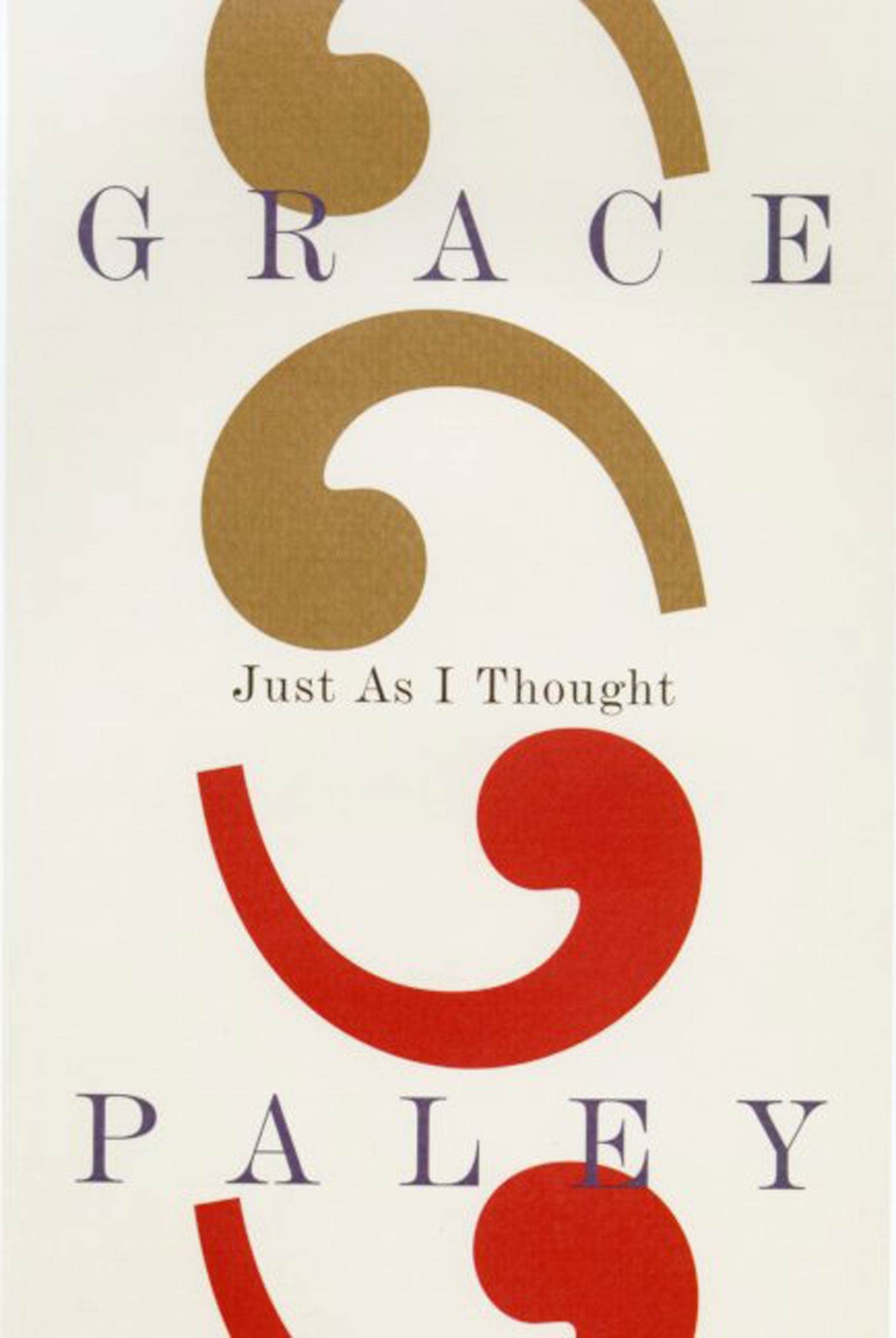
Just As I Thought
$14.39
| Brand | Grace Paley |
| Merchant | Amazon |
| Category | Books |
| Availability | In Stock |
| SKU | 0374525854 |
| Age Group | ADULT |
| Condition | NEW |
| Gender | UNISEX |
| Google Product Category | Media > Books |
| Product Type | Books > Subjects > Literature & Fiction > History & Criticism > Regional & Cultural > United States |
About this item
Just As I Thought
This rich and multifaceted collection of Grace Paley's vivid record of her life. As close to an autobiography as anything we are likely to have from this quintessentially American writer, Just As I Thought gives us a chance to see Paley not only as a writer and "troublemaker" but also as a daughter, sister, mother, and grandmother. Through her descriptions of her childhood in the Bronx and her experiences as an antiwar activist to her lectures on writing and her recollections of other writers, these pieces are always alive with Paley's inimitable voice, humor, and wisdom. “A feisty, passionate gathering of writings.” ― Elle “In Paley, life, literature and politics converge--nonviolently, of course--in a cunning patchwork quilt of radiance and scruple, witness and example, nurture and nag, subversive humor and astonishing art: a Magical Socialism and a Groucho Marxism.” ― John Leonard, The Nation “What distinguishes [ Just As I Thought ] from standard political fare is what sets her stories apart as well: Paley's genius for capturing the way people talk to each other across seemingly unbridgeable divides.” ― Alexis Jetter, Vanity Fair Grace Paley, born in the Bronx in 1922, was a renowned writer and activist. Her Collected Stories was a finalist for both the Pulitzer Prize and the National Book Award. Her other collections include Enormous Changes at the Last Minute and Just As I Thought . She died in Vermont on August 22, 2007. Just as I Thought By Grace Paley Farrar Straus Giroux Copyright © 1999 Grace Paley All right reserved. ISBN: 9780374525859 CHAPTER ONE "Injustice" When I was about nine years old, I was a member of an organizationcalled the Falcons. We were Socialist youths under twelve. Wewore blue shirts and red kerchiefs. We met once a week (or was itonce a month?). To the tune of "Maryland, My Maryland," wesang: The workers' flag is deepest red it shrouded oft our martyred dead. With the Socialist ending, not the Communist one, we sang the"Internationale." We were warned that we would be tempted to singthe Communist ending, because at our occasional commondemonstrations there were more of them singing. They would try,with their sneaky politics, to drown us out. At our meetings we learned about real suffering, which was dueto the Great Depression through which we were living that veryyear. Of course many of my friends already had this information.Their fathers weren't working. Their mothers had become sogrouchy you couldn't ask them for the least little thing. Every day inour neighborhood there were whole apartments, beds, bureaus,kitchen tables out on the street. We understood that thiswas because of capitalism, which didn't care that working peoplehad no work and no money for rent. We also studied prejudice--now known as racism. Prejudice wasparticularly sad, since it meant not liking people for no reason at all,except the color of their skin. That color could happen to anyone ifthey'd been born to some other parents on another street. Weourselves had known prejudice--well, not us exactly. In Europe, thatgodforsaken place, our parents and grandparents had known it well.From a photograph over my grandmother's bed, my handsomeuncle, killed at seventeen because of prejudice, looked calmly at mewhen I sought him for reminder's sake. Despite its adherence tocapitalism, prejudice, and lynching, my father said we were lucky tobe here in this America. We sometimes sang "America theBeautiful" at our meetings. Parents were divided on that. At each meeting we paid 5 [cts.] or 10 [cts.]--not so much to advanceSocialism as to be able to eat cookies at four o'clock. One day atcookie-eating time, our comrade counselor teacher, a young womanabout eighteen years old, announced that we were going to do aplay. There would be a party, too. It would include singing andmaybe dancing. We began to rehearse immediately. She had beenthinking about all this for a couple of weeks. The idea had maturedinto practical action. Our play was simple, a kind of agitprop in which a father comeshome; he says, "Well, Sarah, the shop closed down today. No morework! And without warning!" The mother is in despair. How to feedthe children! The children's breakfast bowls are empty. Some boyscarry the furniture (lots of chairs from the meeting room) out to thehall. Eviction! In the second act, neighbors meet to drag thefurniture back, proving working-class solidarity. They then hold arally and march to City Hall at the back of the room, singing the"Internationale" all the way. The event would have to take place inthe evening after supper in case some father or mother still had ajob. I was one of the little empty-bowl children. Every day after schoolI worked in the bathroom mirror at the creation of a variety ofheartrending expressions. But my sweetest contribution would be the song One dark night when we were all in bed Old mother Leary took a candle to the shed and when the cow tipped
| Brand | Grace Paley |
| Merchant | Amazon |
| Category | Books |
| Availability | In Stock |
| SKU | 0374525854 |
| Age Group | ADULT |
| Condition | NEW |
| Gender | UNISEX |
| Google Product Category | Media > Books |
| Product Type | Books > Subjects > Literature & Fiction > History & Criticism > Regional & Cultural > United States |
Similar Products









Compare with similar items

Are you kitten me: Cat lover journal not... |

Look Deep Into Nature And You Will Under... |

Medical Billing & Coding Demystified, 2n... |
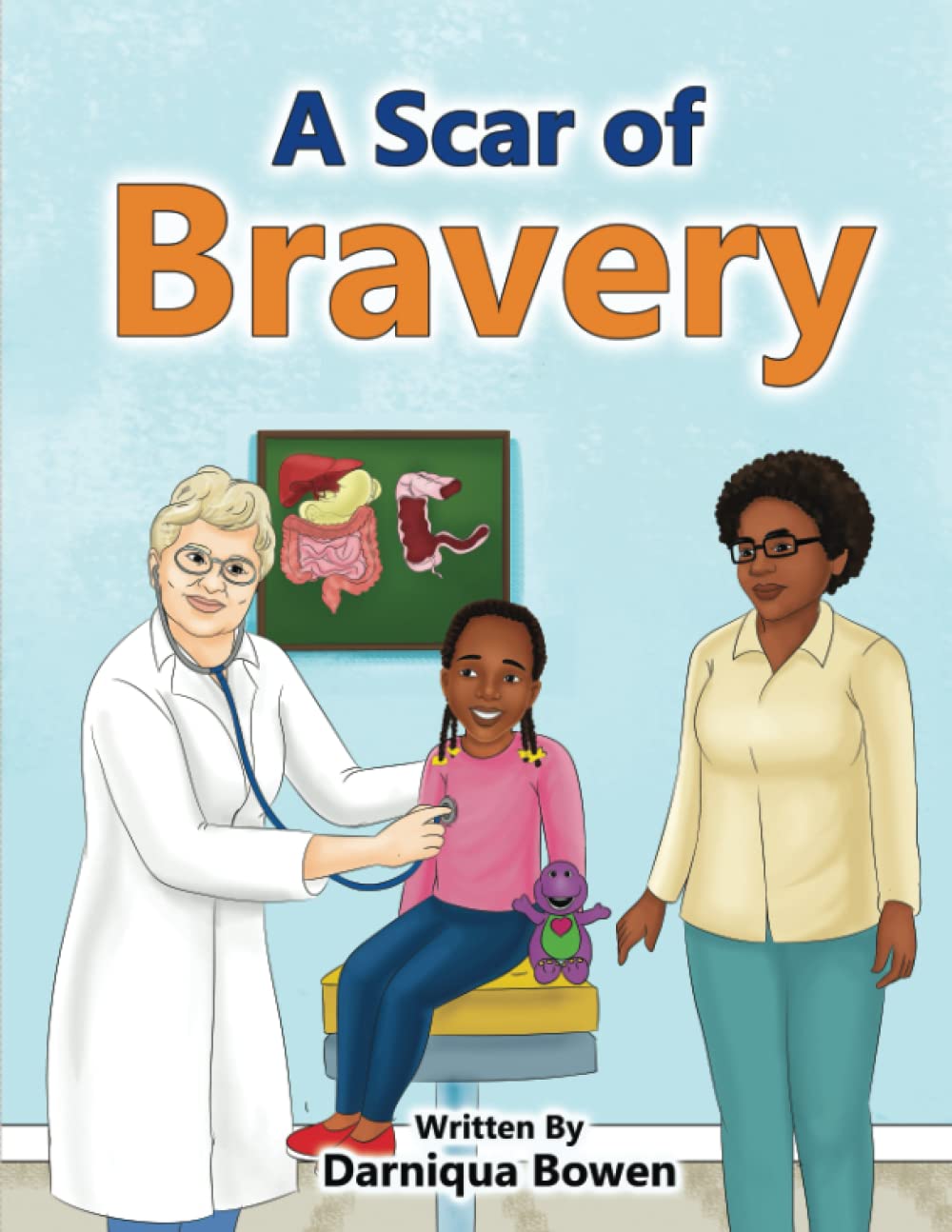
A Scar of Bravery... |
|
|---|---|---|---|---|
| Price | $6.99 | $6.14 | $24.00 | $14.99 |
| Brand | Sens publications | BirdsOfTheWorld Publisher | BURGOS | Darniqua Bowen |
| Merchant | Amazon | Amazon | Amazon | Amazon |
| Availability | In Stock | In Stock | In Stock | In Stock |