
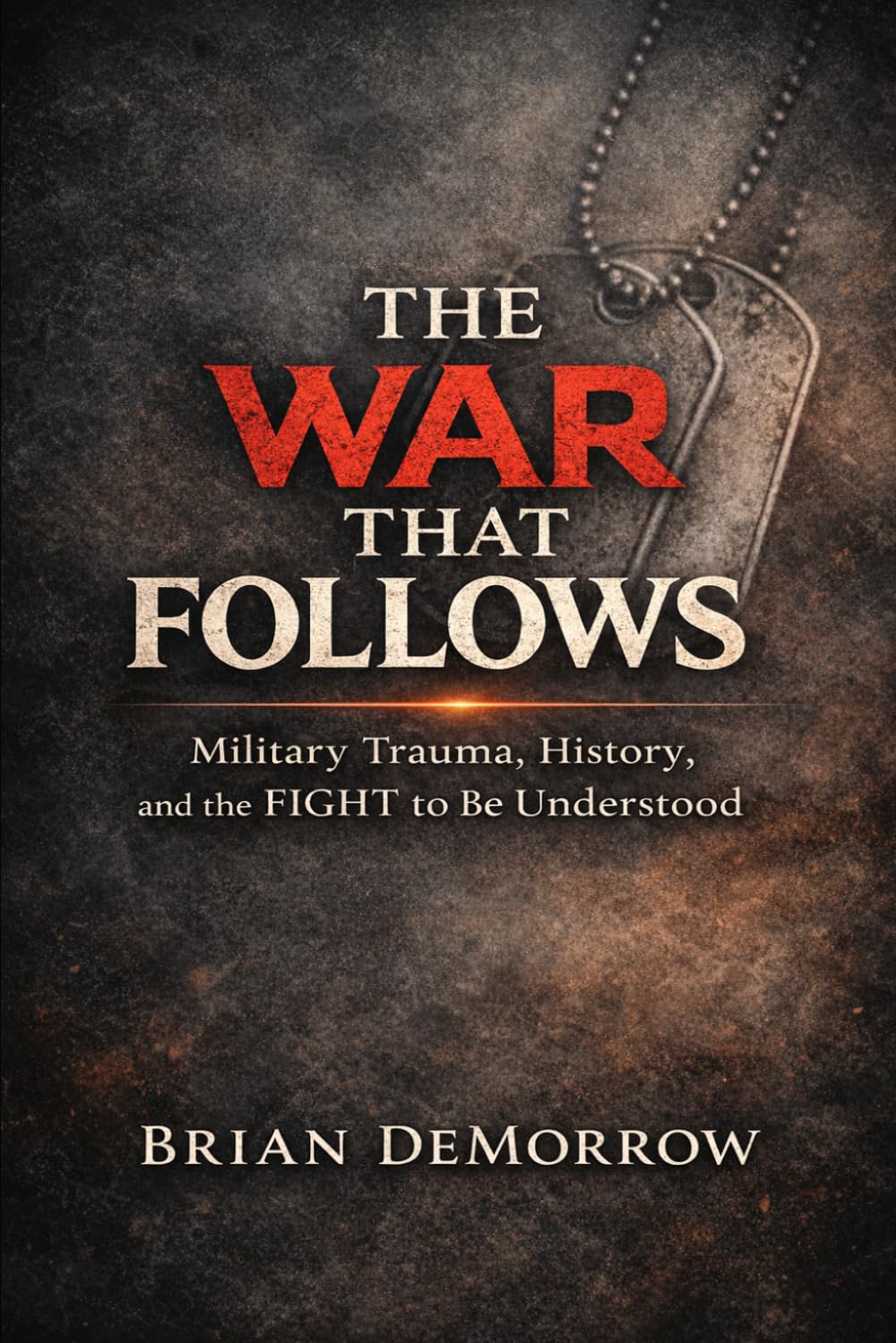
The War That Follows: Military Trauma, History, and the Fight to be Understood
$17.99
| Brand | Brian DeMorrow |
| Merchant | Amazon |
| Category | Books |
| Availability | In Stock |
| SKU | B0GS5MQXJ5 |
| Age Group | ADULT |
| Condition | NEW |
| Gender | UNISEX |
| Google Product Category | Media > Books |
| Product Type | Books > Subjects > Politics & Social Sciences > Social Sciences |
About this item
The War That Follows: Military Trauma, History, and the Fight to be Understood
War does not always end when deployment ends. Sometimes it follows. It follows into grocery stores where sudden noise draws attention before the mind has time to interpret the sound. It follows into quiet houses where doors are checked twice before bed. It follows into conversations that pause half a second too long as the nervous system searches for threat that no longer exists. From the outside, these moments appear small. Inside the body, they can feel like remnants of another world—one where vigilance once meant survival. For many veterans, the transition from military service to civilian life is often described in simple terms: leaving a job, returning home, adjusting to a new routine. The reality is more complex. Military institutions provide structure—clear authority, shared mission, defined expectations. When that structure disappears, the individual must rebuild identity and purpose in an environment governed by very different rules. At the same time, many veterans are navigating psychological responses to experiences that most civilians will never encounter. Some of those responses are widely known. Terms such as post-traumatic stress disorder appear frequently in public conversation. Yet the underlying experience remains widely misunderstood. The misunderstanding is not new. Across generations, soldiers have returned from war with symptoms that were difficult to describe and even harder for others to interpret. In the nineteenth century physicians described “Soldier’s Heart.” During the First World War the condition became known as “Shell Shock.” Later conflicts produced phrases such as “battle fatigue” and “combat stress.” Today the most common term is post-traumatic stress disorder . The language changed. The experience did not. Throughout history, societies have struggled to understand the psychological consequences of war. At times the injury was dismissed as weakness. At other times it was treated as a medical mystery. Only gradually did institutions begin to recognize patterns that connected these experiences across generations of conflict. This book examines that pattern. It explores how the human consequences of war move through several layers of interpretation. Combat experiences occur first at the level of the individual service member. Those experiences produce psychological consequences—changes in perception, memory, and emotional regulation. Military culture and civilian society then attempt to interpret those consequences through the expectations and beliefs of their time. Medicine eventually attempts to classify the pattern through diagnostic language. Finally, governments translate those classifications into systems of care, evaluation, and compensation. Each stage represents an effort to understand and manage the lasting effects of war. Today, that institutional responsibility rests largely with the United States Department of Veterans Affairs. The VA disability and healthcare systems represent the modern endpoint of a long historical process—one that began long before the term PTSD ever existed. Understanding how that system developed requires looking backward across generations of conflict. Civil War veterans described “Soldier’s Heart.” World War I physicians debated the meaning of “Shell Shock.” World War II clinicians studied “battle fatigue.” Vietnam veterans fought for recognition of the psychological consequences of prolonged combat. Each era struggled with the same question: How should a society understand the invisible wounds of war? This book examines that question through history, psychology, and institutional systems. Because the war does not always end when soldiers come home. Sometimes it simply changes form.
| Brand | Brian DeMorrow |
| Merchant | Amazon |
| Category | Books |
| Availability | In Stock |
| SKU | B0GS5MQXJ5 |
| Age Group | ADULT |
| Condition | NEW |
| Gender | UNISEX |
| Google Product Category | Media > Books |
| Product Type | Books > Subjects > Politics & Social Sciences > Social Sciences |
Similar Products









Compare with similar items
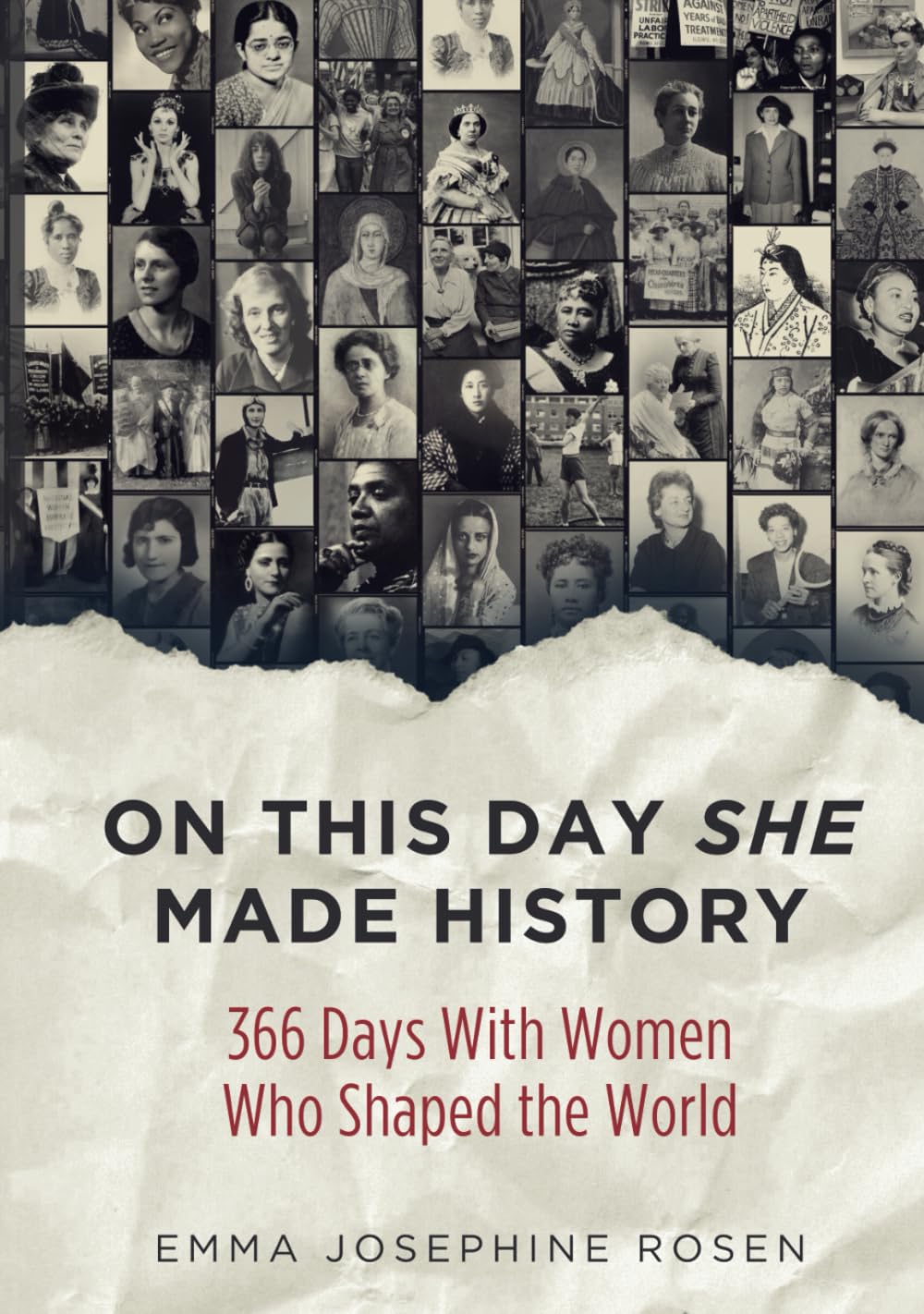
On This Day She Made History: 366 Days W... |

The Accuser's Revenge: Choice Determines... |

Kids Cruise Ship Activity Book: A Great ... |

Morningstar: The Searchers: (Jason’s Sto... |
|
|---|---|---|---|---|
| Price | $22.99 | $9.99 | $6.99 | $24.99 |
| Brand | Emma Josephine Rosen | Eric L Bacon | Paul Meade | CR Petersen |
| Merchant | Amazon | Amazon | Amazon | Amazon |
| Availability | In Stock | In Stock | In Stock | In Stock |