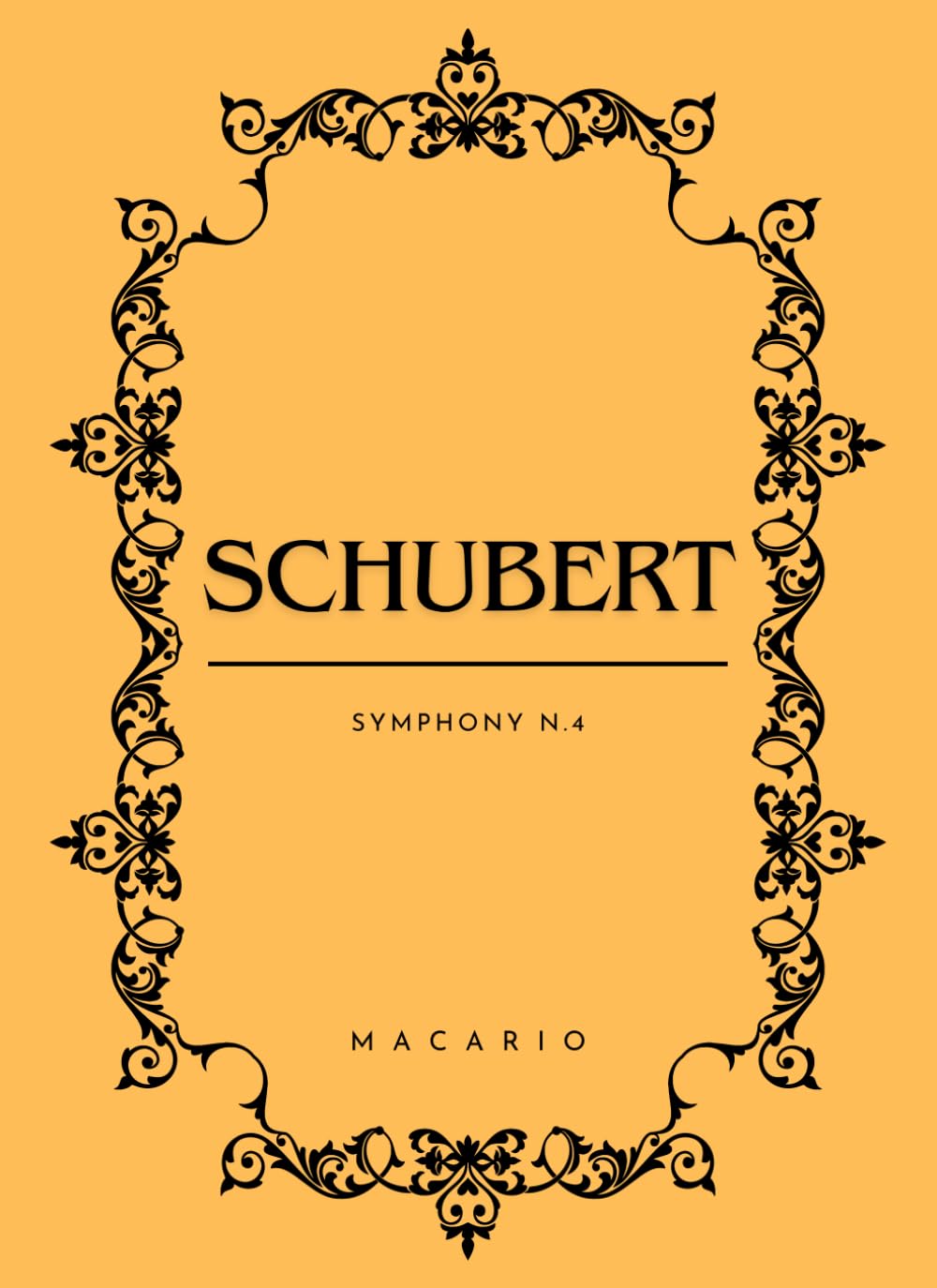
Schubert Symphony N.4: Complete Score
$12.99
| Brand | Franz Schubert |
| Merchant | Amazon |
| Category | Books |
| Availability | In Stock |
| SKU | B0DK72Q7ZJ |
| Age Group | ADULT |
| Condition | NEW |
| Gender | UNISEX |
About this item
Schubert Symphony N.4: Complete Score
Franz Schubert’s Symphony No. 4 in C minor, D. 417 , also known as the "Tragic" Symphony, was composed in 1816, when Schubert was just 19 years old. Despite the title, which was likely added later, the symphony isn’t uniformly tragic in mood but explores darker, more dramatic emotions than his earlier symphonies. It shows Schubert’s attempt to combine the classical symphonic form with deeper emotional expression, influenced by Beethoven’s intensity and the dramatic style of composers like Carl Maria von Weber. The symphony is structured in four movements: 1. Adagio molto – Allegro vivace: The first movement opens with a slow, brooding Adagio molto introduction, creating an air of tension and foreboding. This leads into the fast and fiery Allegro vivace. The movement is dramatic, with bold contrasts between dark, stormy themes and lighter, more lyrical sections. The driving rhythms and the use of minor key give it a sense of urgency and restlessness. Schubert weaves a complex interplay between the strings and woodwinds, with moments of quiet intensity building into powerful climaxes. 2. Andante: The second movement shifts to a more lyrical and reflective mood, in A-flat major. The Andante features a flowing, songlike melody, characteristic of Schubert’s talent for creating beautiful, expressive tunes. Despite its calmness, there are moments of tension and emotional depth, with subtle shifts in harmony and dynamics. The movement alternates between peaceful passages and more dramatic episodes, maintaining a balance between tranquility and underlying emotion. 3. Menuetto: Allegro vivace – Trio: The third movement is a spirited Minuet, but unlike the playful and graceful minuets of Schubert’s earlier symphonies, this one has a more forceful and energetic character. Marked Allegro vivace, the Menuetto is driven by a persistent, rhythmic pulse and bold, assertive melodies. The contrasting Trio section provides a moment of relief, with a lighter, more lyrical theme, before returning to the intensity of the Minuet. 4. Allegro: The final movement is an Allegro that brings the symphony to a dramatic and powerful conclusion. The movement is marked by its rhythmic energy, minor key tonality, and driving forward momentum. Schubert uses bold contrasts in dynamics and texture to heighten the dramatic tension, with passages of stormy intensity juxtaposed against more lyrical interludes. The minor key adds to the symphony’s overall sense of tragedy, while the energetic pace gives it a restless, almost defiant quality. Despite being called the "Tragic" Symphony, Schubert’s Fourth Symphony isn’t entirely bleak, but it does explore darker, more emotionally complex territory than his earlier works. It reveals a young composer experimenting with more intense emotional expression while still adhering to classical symphonic forms, offering a glimpse of the Romantic spirit that would come to define his later works.
| Brand | Franz Schubert |
| Merchant | Amazon |
| Category | Books |
| Availability | In Stock |
| SKU | B0DK72Q7ZJ |
| Age Group | ADULT |
| Condition | NEW |
| Gender | UNISEX |
Similar Products





Compare with similar items

Allies Divided: Transatlantic Policies f... |
Investing In Revolution... |

BALLADES GITANES - ROMANCERO GITANIO - É... |

Self - Love Journal and Planner... |
|
|---|---|---|---|---|
| Price | $30.00 | $18.00 | $19.95 | $29.99 |
| Brand | Robert D. Blackwill | Charles Hugh Smith | Federico García Lorca | Victrisa K Green |
| Merchant | Amazon | Amazon | Amazon | Amazon |
| Availability | In Stock | In Stock | In Stock | In Stock |