
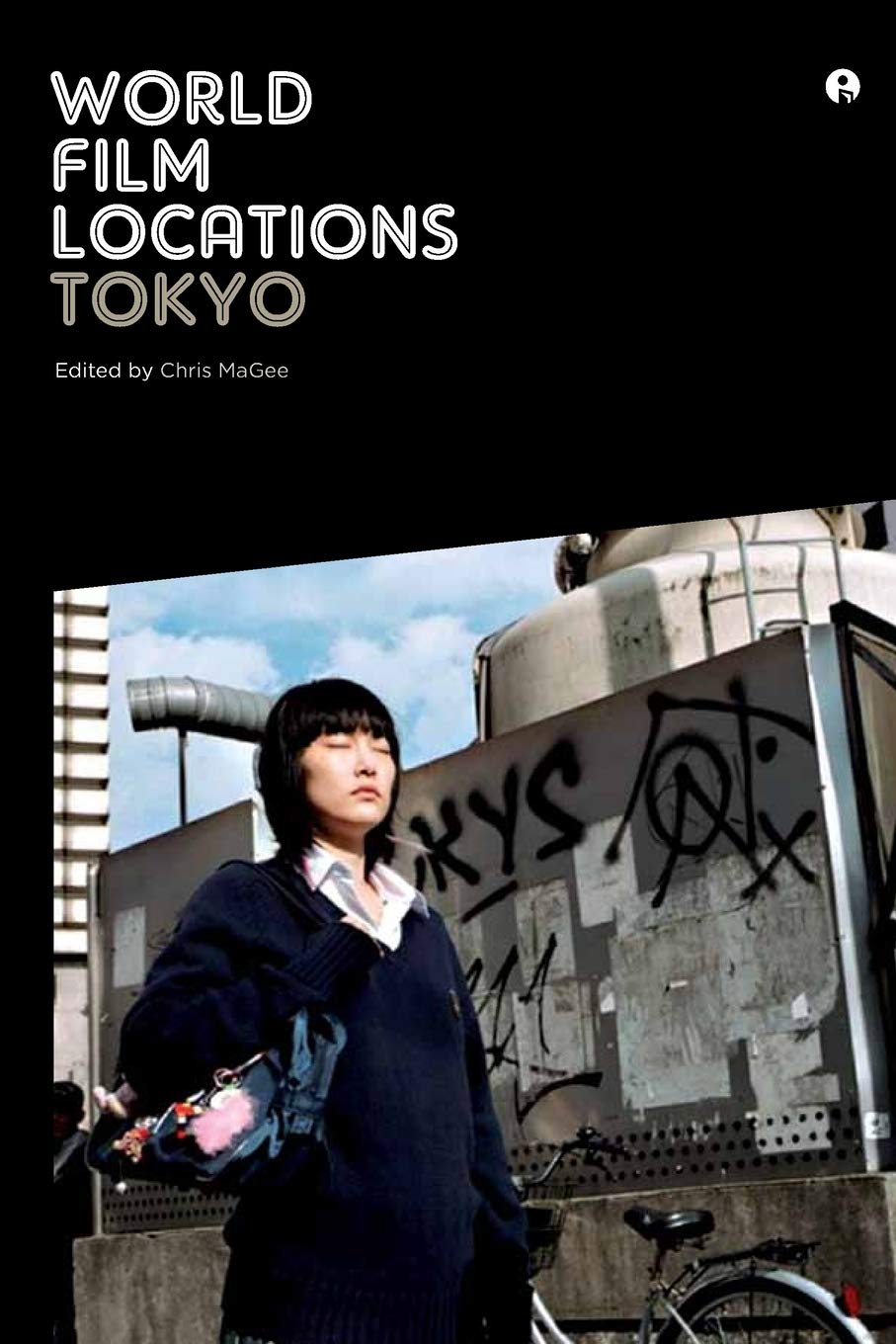
World Film Locations: Tokyo
$28.50
| Brand | Chris MaGee |
| Merchant | Amazon |
| Category | Books |
| Availability | In Stock Scarce |
| SKU | 1841504831 |
| Age Group | ADULT |
| Condition | NEW |
| Gender | UNISEX |
| Google Product Category | Media > Books |
| Product Type | Books > Subjects > Humor & Entertainment > Movies > Video > Reference |
About this item
World Film Locations: Tokyo
From Tokyo Story to Godzilla , You Only Live Twice to Enter the Void , World Film Locations: Tokyo presents a kaleidoscopic view of one of the world’s most exciting cities through the lens of cinema. Illustrated throughout with dynamic screen shots, this volume in Intellect’s World Film Locations series spotlights fifty key scenes from classic and contemporary films shot in Tokyo, accompanied by insightful essays that take us from the wooden streets of pre-nineteenth-century Edo to the sprawling “what-if” megalopolis of science fiction and fantasy anime. Important themes and players—among them Akira Kurosawa, Samuel Fuller, and Sofia Coppola—are individually considered. For the film scholar, or for all those who love Japanese cinema and want to learn more, World Film Locations: Tokyo will be an essential guide. "A celluloid anthology of immense archival value." ― Japan Times Published On: 2011-12-25 Chris MaGee is founder and editor of Toronto J-Film Pow-Wow , the premiere Japanese film blog in Canada, and a programmer and artistic director of the Shinsedai Cinema Festival, a showcase of new and independent film from Japan that takes place annually at the Japanese Canadian Cultural Centre in Toronto. World Film Locations Tokyo By Chris MaGee Intellect Ltd Copyright © 2011 Intellect Ltd All rights reserved. ISBN: 978-1-84150-483-4 Contents Maps/Scenes, Scenes 1-7 1927 - 1951, Scenes 8-14 1951 - 1966, Scenes 15-21 1966 - 1978, Scenes 22-28 1980 - 1997, Scenes 29-36 1997 - 2002, Scenes 37-45 2003 - 2009, Essays, Tokyo: City of The Imagination Jon Jung, Worst of Times/Best of Times: Post-War Tokyo in Film Eric Evans, Tokyo Must Burn! The End of The World Through Anime Eyes Samuel Jamier, Tokyo Stories: The Humanistic Cityscape Of Yasujiro Ozu John Berra, Strangers Among Us: A Cinematic View of Immigrants In Tokyo Roberta Novielli, Shinjuku: Dawn is Wet Stephen Sarrazin, Edo: Old Tokyo resurrected on film Reiko Tahara, Backpages, Resources, Filmography, Contributor Bios, CHAPTER 1 TOKYO UPFRONT City of the Imagination Text by JON JUNG 'Tokyo is a city criss-crossed by trains, tied together with electric wire, she shows her veins' – Sans Soleil, 1983 IN THE MANY URBAN SCENES in Blade Runner (Ridley Scott, 1982), the audience is compelled to identify with a world that seems alien yet so familiar. Through dialogue and landmarks we discover that Ridley Scott's dystopic cops-and-replicants tale is set in Los Angeles, but there's no mistaking the influence that the Shinjuku and Ginza nightscapes have on the visual design of that film. That a few flashing neon signs over a night-time cityscape can evoke such association over visually similar cities such as Hong Kong and New York really exemplify Tokyo as the city of the imagination. To call Tokyo a 'city' of the imagination, however, is a bit of a misnomer. Geographically speaking, Tokyo is not actually just a city, but a sprawling megalopolis which consists of the 23 wards that make up central Tokyo, 26 cities residing in its west, and its many natural and artificial islands in its bay and surrounding ocean. The beauty of Tokyo lies in this balance: Central Tokyo, every bit the image of the metropolis in all its brash candy-colour glory, with the cattle-like droves of people and traffic, darting trains and massive skyscrapers shown in films like Enter the Void (Gaspar Noe, 2009) and The Fast and The Furious: Tokyo Drift (Justin Lin, 2006). Western Tokyo, built as the bedroom community of Tokyo's center, is generally the quiet and much more sane suburbs as depicted in Adrift in Tokyo (Satoshi Miki, 2007) and Kakera (Momoko Ando, 2009). Finally, the peaceful and austere islands, popular places of destination and playlands for traveling Tokyoites, can be seen in films such as Battle Royale (Kinji Fukasaku, 2000) and Gojira/Godzilla (Ishirô Honda, 1954), never mind all of the chaos and mayhem taking place around the beautiful scenery in those films. Tokyo as a destination or place to live has a lot going for it. But Tokyo has been more than just a location. It's a brand, a fashion, a style, a flavour, a dream, and a wish. In 2010, the Japanese government, through its Ministry of Economy, Trade and Industry, developed a policy of 'Cool Japan' to help promote tourism and trade through its unique popular culture. A 'Cool Japan' office has even been set up within the Ministry and the policy itself is designed along the government's 'new growth strategy'. As well, a 'Cool Japan' TV show is broadcast on the cable arm of Japan's public network, NHK. According to the show's website, their goal, not surprisingly, is to '[illustrate] the quickly changing Japanese culture and how it is perceived by the international community.' Though some might question the policy's worth and timeliness; i.e. fans of Japan have been partaking of Japan's 'cool' for years; that the government acknowledges a facet of i
| Brand | Chris MaGee |
| Merchant | Amazon |
| Category | Books |
| Availability | In Stock Scarce |
| SKU | 1841504831 |
| Age Group | ADULT |
| Condition | NEW |
| Gender | UNISEX |
| Google Product Category | Media > Books |
| Product Type | Books > Subjects > Humor & Entertainment > Movies > Video > Reference |
Similar Products







Compare with similar items
Chicago: 6x9 Lined Journal | Memory Book... |

Blood Over the Border... |

Want Me Always (Heron Harbor)... |

X Large word search animals... |
|
|---|---|---|---|---|
| Price | $5.99 | $14.00 | $9.99 | $7.99 |
| Brand | Travel World Map Journals | Don Crowder | Lea Nolan | jose martin pompa enriquez |
| Merchant | Amazon | Amazon | Amazon | Amazon |
| Availability | In Stock | In Stock | In Stock | In Stock |