

Markets and the Environment, Second Edition (Foundations of Contemporary Environmental Studies Series)
$36.00
| Brand | Mr. Nathaniel O. Keohane |
| Merchant | Amazon |
| Category | Books |
| Availability | In Stock Scarce |
| SKU | 1610916077 |
| Age Group | ADULT |
| Condition | NEW |
| Gender | UNISEX |
About this item
Markets and the Environment, Second Edition (Foundations of Contemporary Environmental Studies Series)
A clear grasp of economics is essential to understanding why environmental problems arise and how we can address them. So it is with good reason that Markets and the Environment has become a classic text in environmental studies since its first publication in 2007. Now thoroughly revised with updated information on current environmental policy and real-world examples of market-based instruments, the primer is more relevant than ever. The authors provide a concise yet thorough introduction to the economic theory of environmental policy and natural resource management. They begin with an overview of environmental economics before exploring topics including cost-benefit analysis, market failures and successes, and economic growth and sustainability. Readers of the first edition will notice new analysis of cost estimation as well as specific market instruments, including municipal water pricing and waste disposal. Particular attention is paid to behavioral economics and cap-and-trade programs for carbon. Throughout, Markets and the Environment is written in an accessible, student-friendly style. It includes study questions for each chapter, as well as clear figures and relatable text boxes. The authors have long understood the need for a book to bridge the gap between short articles on environmental economics and tomes filled with complex algebra. Markets and the Environment makes clear how economics influences policy, the world around us, and our own lives. "A well-structured, thoughtful, complete introduction to environmental and resource economics...highly recommended." ― Choice Nathaniel O. Keohane is Vice President at Environmental Defense Fund, where he leads EDF’s International Climate program. Sheila M. Olmstead is Associate Professor of Public Affairs at the University of Texas at Austin. Markets and the Environment By Nathaniel O. Keohane, Sheila M. Olmstead ISLAND PRESS Copyright © 2016 Nathaniel O. Keohane and Sheila M. Olmstead All rights reserved. ISBN: 978-1-61091-607-3 Contents Preface, Chapter 1: Introduction, Chapter 2: Economic Efficiency and Environmental Protection, Chapter 3: The Benefits and Costs of Environmental Protection, Chapter 4: The Efficiency of Markets, Chapter 5: Market Failures in the Environmental Realm, Chapter 6: Managing Stocks: Natural Resources as Capital Assets, Chapter 7: Stocks That Grow: The Economics of Renewable Resource Management, Chapter 8: Principles of Market-Based Environmental Policy, Chapter 9: The Case for Market-Based Instruments in the Real World, Chapter 10: Market-Based Instruments in Practice, Chapter 11: Sustainability and Economic Growth, Chapter 12: Conclusion, Discussion Questions, References, Further Reading, CHAPTER 1 Introduction This book is a primer on the economics of the environment and natural resources. The title, Markets and the Environment, suggests one of our central themes. An understanding of markets — why they work, when they fail, and what lessons they offer for the design of environmental policies and the management of natural resources — is central to an understanding of environmental issues. But even before we start thinking about how markets work, it is useful to begin with a more basic question: What is environmental economics? Economics and the Environment "Environmental economics" may seem like a contradiction in terms. Some people think that economics is just about money, that it is preoccupied with profits and economic growth and has nothing to do with the effects of human activity on the planet. Others view environmentalists as being naive about economic realities or "more concerned about animals than jobs." Of course neither stereotype is true. Indeed, not only is "the environment" not separate from "the economy," but environmental problems cannot be fully understood without understanding basic economic concepts. Economics helps explain why firms and individuals make the decisions they do — why coal (despite generating significant local air pollution and carbon dioxide emissions) still generates almost 40 percent of electricity in the United States, or why some people drive large sport utility vehicles instead of Priuses. Economics also helps predict how those same firms and individuals will respond to a new set of incentives — for example, what investments electric utilities will make in a carbon-constrained world and how high gas prices would have to rise before people stopped buying enormous cars. At its core, economics is the study of the allocation of scarce resources. This central focus, as much as anything else, makes it eminently suited to analyzing environmental problems. Let's take a concrete example. The Columbia and the Snake Rivers drain much of the U.S. Pacific Northwest, providing water for drinking, irrigation, transportation, and electricity generation and supporting endangered salmon populations. All these activities — including sal
| Brand | Mr. Nathaniel O. Keohane |
| Merchant | Amazon |
| Category | Books |
| Availability | In Stock Scarce |
| SKU | 1610916077 |
| Age Group | ADULT |
| Condition | NEW |
| Gender | UNISEX |
Similar Products










Compare with similar items

The Villain (The Vigilantes)... |

Otter Coloring Book For Kids: Over 30 cu... |

Vintage Christmas Decorative Paper Volum... |
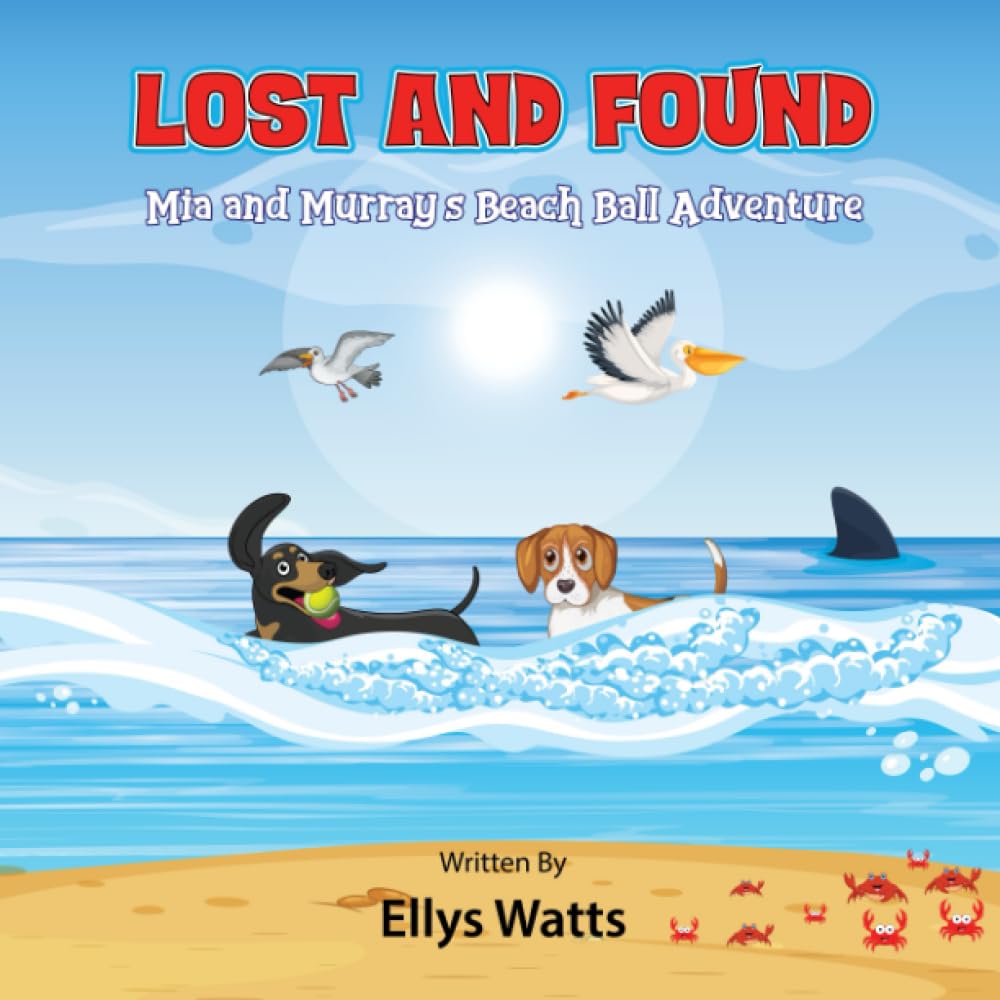
LOST AND FOUND Mia and Murrays beach bal... |
|
|---|---|---|---|---|
| Price | $18.99 | $7.99 | $12.99 | $12.99 |
| Brand | Dr. Rebecca Sharp | Naada Ouker | Marvett Publishing | Miss Ellys Louise Watts |
| Merchant | Amazon | Amazon | Amazon | Amazon |
| Availability | In Stock | In Stock | In Stock | In Stock |