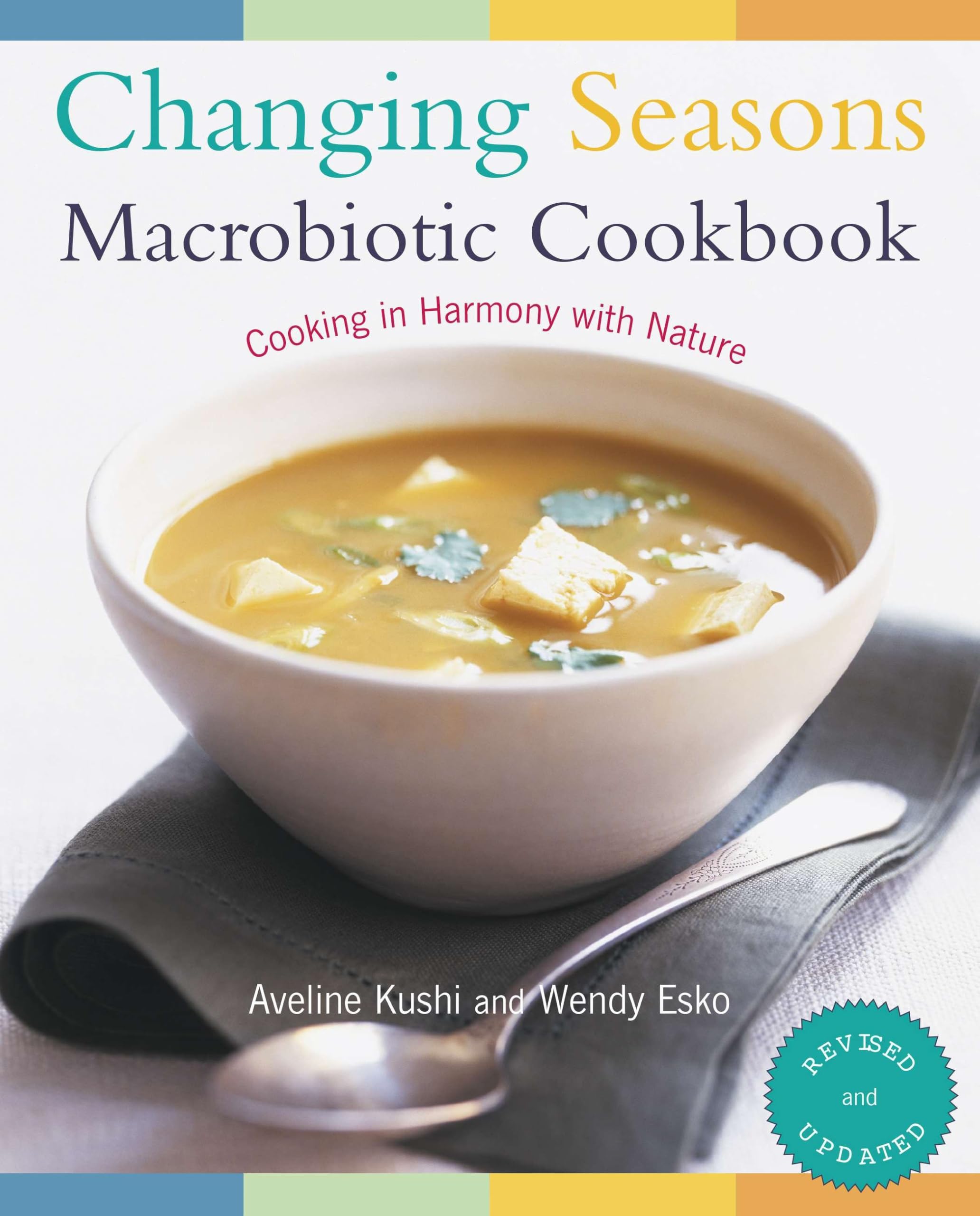
Changing Seasons Macrobiotic Cookbook: Cooking in Harmony with Nature
$16.25
| Brand | Aveline Kushi |
| Merchant | Amazon |
| Category | Books |
| Availability | In Stock |
| SKU | 1583331646 |
| Color | Multicolor |
| Age Group | ADULT |
| Condition | NEW |
| Gender | UNISEX |
| Google Product Category | Media > Books |
| Product Type | Books > Subjects > Cookbooks, Food & Wine > Cooking by Ingredient > Natural Foods |
About this item
Changing Seasons Macrobiotic Cookbook: Cooking in Harmony with Nature
Rooted in centuries-old principles, the macrobiotic diet consists of simple yet highly nutritious foods such as whole grains, vegetables, and beans, selected and prepared in harmony with the seasons. From lightly sautéed spring greens and sea vegetables and refreshing summer salads, to harvest vegetables and hearty winter stews, The Changing Seasons Macrobiotic Cookbook provides hundreds of easy-to-follow and flavorful recipes for complete and balanced macrobiotic meals. A combination of great taste and whole foods, this is traditional macrobiotic cooking at its best. Aveline Kushi was one of the world’s foremost experts on macrobiotic cooking. She began her study of macrobiotics in 1950, under the guidance of George Ohsawa, the founder of modern macrobiotics. She married Michio Kushi in 1952, and for the next ten years taught macrobiotic and natural cooking in New York. Michio and Aveline moved to Boston in 1965, and jointly established a variety of successful macrobiotic enterprises and educational ventures. Aveline’s cooking classes in the Boston area attracted thousands of students, and she and Michio lectured extensively throughout the world. Wendy Esko is this country’s leading author of macrobiotic cookbooks. She began practicing macrobiotics in 1971. Together with her husband Edward, and Michio and Aveline Kushi, she helped develop the East West Foundation, a non-profit educational organization. She began teaching macrobiotic cooking in 1976, and her studies of macrobiotics have taken her around the world. Wendy teaches regularly at the Kushi Institute as well as throughout New England. She is the author of Introducing Macrobiotic Cooking, and Macrobiotic Cooking for Everyone. ONE The Art of Cooking with the Seasons THE STANDARD MACROBIOTIC DIET The recipes in this cookbook are based on standard macrobiotic dietary recommendations that can be applied to your own kitchen. Certainly there is no one diet that is suited to every need. Modifications are always necessary, depending on where you are living, the type of climate there, the particular season, and your sex, age, job, personal condition, and level of activity. In the temperate, four-season climate that characterizes most of the United States, an optimum daily diet consists of the following general proportions of foods. General Proportions, Optimum Daily Diet The general proportions in the standard macrobiotic diet are based on the traditional dietary patterns that protected our ancestors from many of the degenerative disorders that we suffer from today. The diet also enables us to achieve harmony with changing environmental conditions. Until recent times, for example, cooked whole cereal grains were eaten as staple foods throughout the world: rice in the Orient; wheat, barley, rye, and oats in Europe and America; buckwheat or kasha in Russia and Central Europe; corn in the Americas; the millet, wheat, and other whole grains in Africa and the Middle East. Plus Beverages, Occasional Supplementary Foods, Seasonings, and Condiments In Western countries, bread was the traditional “staff of life,” eaten in its whole, natural form until this century. The central place accorded to whole cereal grains in Europe and America is recorded in the prayer with which generations of people have begun each day: “Give us this day our daily bread”—meaning food in general. In Japanese, the term used for a meal is gohan, which means rice, indicating the significance of whole cereal grains in the traditional Japanese diet. Throughout the world, traditional diets have included fresh local vegetables and beans and their products along with whole grains. In many parts of the world, sea vegetables and other products from the oceans, together with a wide range of fermented foods such as naturally aged sauerkraut, pickled vegetables, miso, shoyu, and tempeh, were also traditional. In general, animal proteins, including meat, eggs, and dairy products, were used much less frequently than at present, while people in temperate climates rarely ate fruits and other products imported from the tropics. Using whole grains, local vegetables, beans, and sea vegetables as our primary foods complements the structure and function of the human digestive system. Our thirty-two adult teeth are better suited for crushing and grinding plant fibers than they are for tearing animal flesh. We have twenty-eight incisors, premolars, and molars, which are best suited for grains, beans, and vegetables, but only four canine teeth, which can be used for tearing animal foods. According to the structure of our teeth, the ideal ratio between vegetable and animal foods is seven to one. The length of the human digestive tract also favors the consumption of more plant than animal foods. Carnivores generally have relatively short intestines, to prevent the buildup of the harmful bacteria and toxins that accompany the decomposition of animal flesh. Because the human digestive tract is long and
| Brand | Aveline Kushi |
| Merchant | Amazon |
| Category | Books |
| Availability | In Stock |
| SKU | 1583331646 |
| Color | Multicolor |
| Age Group | ADULT |
| Condition | NEW |
| Gender | UNISEX |
| Google Product Category | Media > Books |
| Product Type | Books > Subjects > Cookbooks, Food & Wine > Cooking by Ingredient > Natural Foods |
Similar Products









Compare with similar items

Italian Brainrot Coloring Book: 50 bizar... |

Leveling Up Psychology: Integral Theory,... |

Last Hour (Emma Last FBI Mystery Series)... |

Stroop Test Brain Teaser: A Fun Introduc... |
|
|---|---|---|---|---|
| Price | $9.99 | $5.79 | $14.99 | $10.99 |
| Brand | MR Joseph Trush JT | Nick Ten | Mary Stone | Kay Allbright |
| Merchant | Amazon | Amazon | Amazon | Amazon |
| Availability | In Stock | In Stock | In Stock | In Stock |