
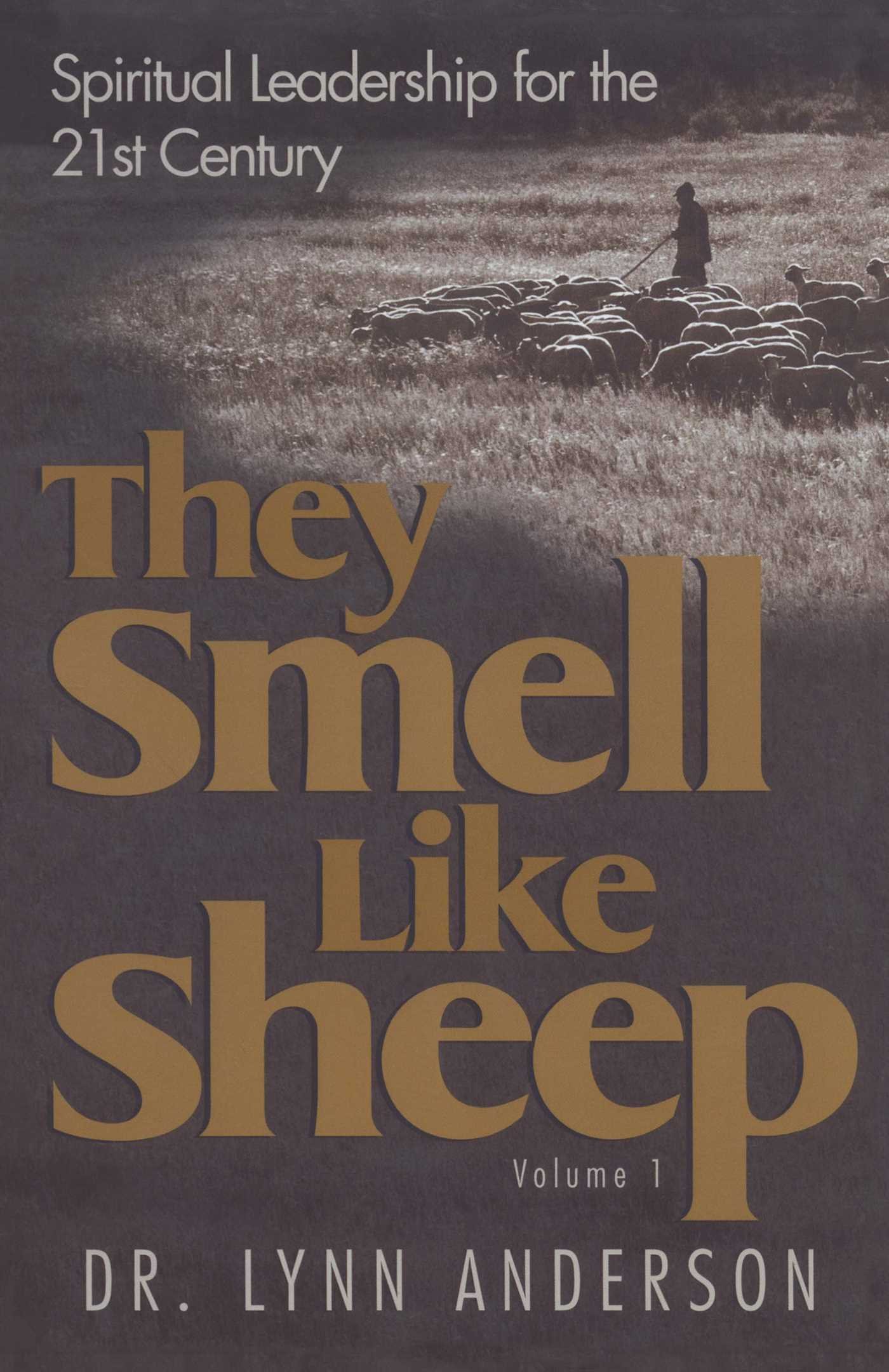
They Smell Like Sheep: Spiritual Leadership for the 21st Century
$10.60
| Brand | Dr. Lynn Anderson Dr |
| Merchant | Amazon |
| Category | Books |
| Availability | In Stock |
| SKU | 1582292973 |
| Age Group | ADULT |
| Condition | NEW |
| Gender | UNISEX |
About this item
They Smell Like Sheep: Spiritual Leadership for the 21st Century
Exploring the biblical models of shepherding, mentoring, and equipping, They Smell Like Sheep unlocks the secrets of leadership for anyone. What kind of leadership will effectively lead the church into the morally turbulent twenty-first century? The same kind of leadership that led it through the morally and politically chaotic first century. Shepherding. This is the kind of leadership Jesus used, and this is the kind of leadership that will take his church where he wants it to go. While the term "shepherd" produces warm images of love, care, and tenderness, it also describes a form of leadership that is perilously protective, dangerous, dirty, and smelly. "Shepherd" is something that every follower of Christ, the Good Shepherd, is called to become. Lynn Anderson, in this important book, leads us backwards in time to discover and identify the biblical leader for the future needs of the Christian community. Anderson's deep dig for truth will concern, convict, and confront us about where leadership has been, and will set a new standard for where the future leader must go. Lynn Anderson has been in the ministry for over thirty-five years and currently serves as president of Hope Network, a ministry dedicated to coaching, mentoring, and equipping spiritual leaders for the twenty-first century. He received his doctorate from Abilene Christian University in 1990. Anderson's lifelong career of ministry has involved speaking nationwide to thousands of audiences and authoring eight books -- including The Shepherd's Song ; Navigating the Winds of Change ; Heaven Came Down ; They Smell like Sheep, Volume 1 ; and If I Really Believe, Why Do I Have These Doubts? He and his wife, Carolyn, live in Dallas. They are the parents of four grown children and the grandparents of eight wonderful grandchildren. Shepherds on the Hills of Bible History One Sunday, a dear friend and member of my congregation cornered me after a sermon in which I repeatedly referred to elders as "shepherds." "Why don?t you find a better way to communicate this spiritual leadership idea? No one in our church knows anything about shepherds and sheep?especially the way all that stuff worked in the ancient world. That picture just doesn?t connect with a modern church." Admittedly, the shepherd metaphor does sound strange in the cyber-world of our daily experience. We don?t normally see these picturesque, rural characters rolling down the expressways or eating at our local McDonald?s. But, after carefully considering my friend?s suggestion and searching in vain for a contemporary metaphor that would better connect the biblical notion with our times, I finally had to explain, "I can?t find any figure equivalent to the shepherd idea in our modern, urban world. Besides, if I drop the shepherd and flock idea, I would have to tear about five hundred pages out of my Bible, plus leave the modern church with a distorted?if not neutered?view of spiritual leadership." God keeps pointing shepherds to the pasture to struggle with sheep. In Bible times, the shepherds were as common and familiar to most Middle Easterners as are telephones and supermarkets to modern-day Americans. Almost anywhere in the Bible world, eyes that lifted to gaze across the landscape would fall upon at least one flock of sheep. As my friend Ted Waller reminds us, in antiquity, the family often depended upon sheep for survival. A large part of their diet was milk and cheese. Occasionally, they ate the meat. Their clothing and tents were made of wool and skins. Their social position often depended upon the well-being of the flock, just as we depend upon jobs and businesses, cars and houses. Family honor might depend upon defending the flock. Shepherds throughout History The shepherd metaphor shows up more than five hundred times in Scripture, across both Old and New Testaments. Without question, the dominant biblical model for spiritual leadership is the shepherd and flock. If we want to understand the biblical model for leadership, we must embrace the concept of shepherd. God as Shepherd In the "olden days" of the Old Testament world, the watch-care of God himself is pictured in the shepherd/sheep relationship. Most of us can quote the familiar words, "The Lord is my shepherd." The prophet Isaiah penned this less familiar but equally eloquent picture of God, "He tends his flock like a shepherd: He gathers the lambs in his arms and carries them close to his heart; he gently leads those that have young." What a winsome picture of our God! Can?t you just envision the awkward and delicate little lamb, ears askew, one gangly leg dangling near the shepherd?s elbow? Notice that the shepherd tilts his head so that his beard nuzzles the lamb?s cheek and his resonant voice murmurs gently to the lamb as they move through the twilight toward the rest and safety of the sheepfold. Old Testament readers would have pictured just such a gentle, caring relationship between God
| Brand | Dr. Lynn Anderson Dr |
| Merchant | Amazon |
| Category | Books |
| Availability | In Stock |
| SKU | 1582292973 |
| Age Group | ADULT |
| Condition | NEW |
| Gender | UNISEX |
Similar Products










Compare with similar items
Sniper Of The Enemy: 35 POWERFUL PRAYERS... |

INMACULADO CORAZÓN DE MARÍA NOVENA: Hist... |

Telegraph Hill... |

Stations: Fictions & Nonfictions... |
|
|---|---|---|---|---|
| Price | $12.22 | $8.99 | $9.95 | $18.00 |
| Brand | Miah Rowland | P. Miguel Gómez | Arthur McGinn | Omer Siddharta |
| Merchant | Amazon | Amazon | Amazon | Amazon |
| Availability | In Stock | In Stock | In Stock | In Stock Scarce |