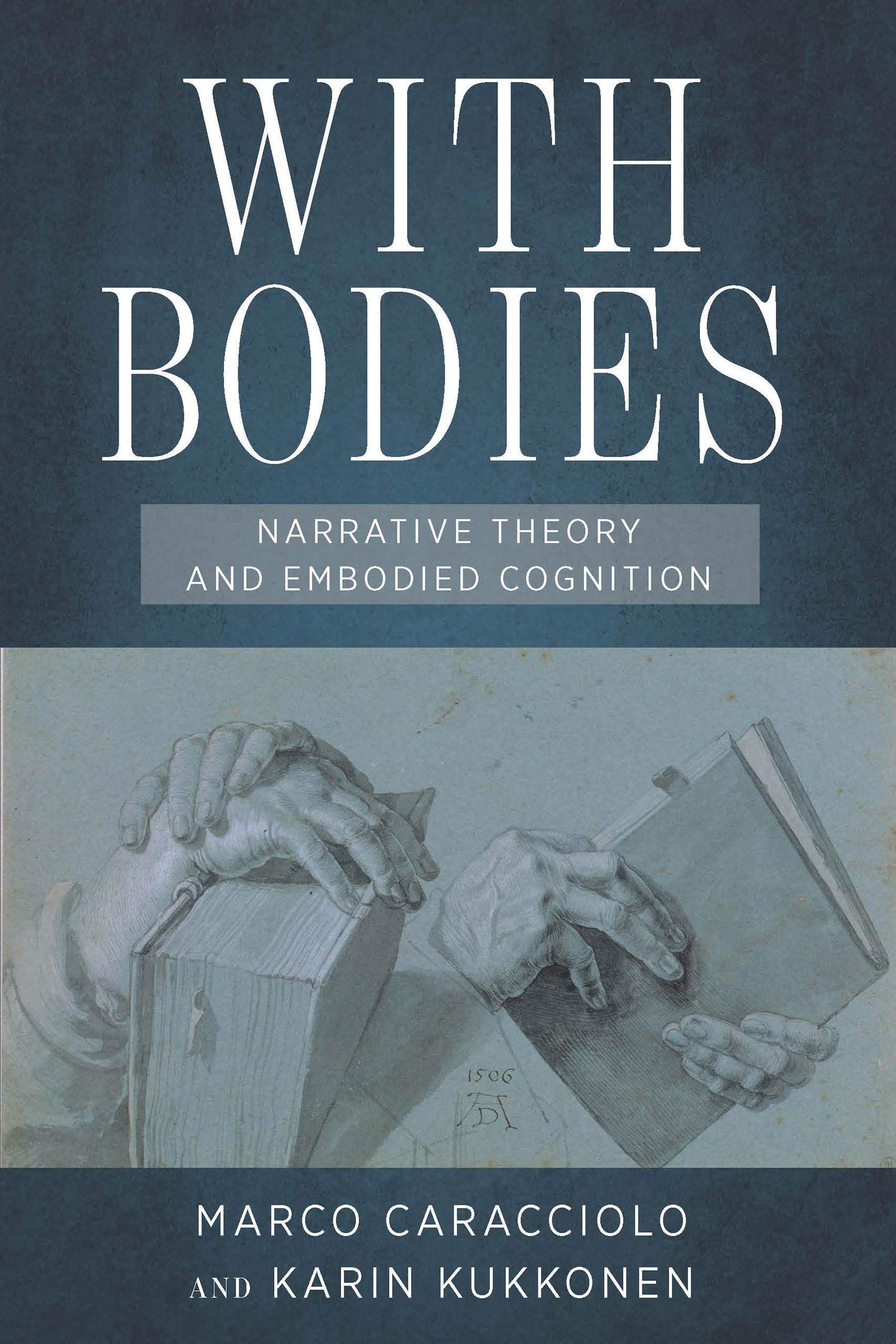
With Bodies: Narrative Theory and Embodied Cognition (Theory and Interpretation of Narrative)
$34.95
| Brand | Marco Caracciolo |
| Merchant | Amazon |
| Category | Books |
| Availability | In Stock |
| SKU | 0814258085 |
| Age Group | ADULT |
| Condition | NEW |
| Gender | UNISEX |
About this item
With Bodies: Narrative Theory and Embodied Cognition (Theory and Interpretation of Narrative)
We read not only with our eyes and minds, but with our entire body. In With Bodies , Marco Caracciolo and Karin Kukkonen move systematically through all elements of narrative and put them into dialogue with recent research in neuroscience, cognitive psychology, cognitive linguistics, and philosophy of mind to investigate what it means to read literary narratives bodily. They draw their findings from a wide corpus of material―narratives from antiquity to the present and composed in various languages, from Apuleius’s Metamorphoses to Hilary Mantel’s Wolf Hall ―and craft their embodied narratology to retool current theories about authors, narrators and characters, time and space in storyworlds, and plot. Their investigation serves as a foundation for wider discussions on embodied narratology’s contributions to literary history, computation and AI, posthumanism, gender studies, and world literature. “[ With Bodies ] is a most welcome contribution to an ongoing debate. It makes a number of important suggestions about the role of embodied cognition in narrative, and it reminds us that there are still some open questions concerning the exact kind and intensity of embodiment effects in narrative reading.” —Ralf Schneider, Journal of Literary Theory “ With Bodies demonstrates convincingly that narrative can be seen as an inherently embodied practice. I would recommend the book to everyone who is interested in the question of what situated cognition can tell us about narrative processing.” —Jan Alber, Anglistik "[ With Bodies: Narrative Theory and Embodied Cognition ] contains many thought-provoking passages and incorporates lively and often fascinating examples." —Maria C. Scott, Modern Language Review “[An] extremely useful and lucid overview of a field often beset by technical terminology … This book offers a substantial contribution to the field of narratology in its revised theory of what happens when we read. It enables new things to be said about the experience of narrative, and will no doubt facilitate the development of many new ideas significant for storytelling across all its forms.” —Stephanie Moran, Leonardo “Given the rise of cognitive approaches to narrative, the publication of Caracciolo and Kukkonen’s With Bodies is extremely timely. In combining and extending the works of both authors, it constitutes a unique contribution.” —Nancy Easterlin, author of A Biocultural Approach to Literary Theory and Interpretation Marco Caracciolo is Associate Professor of English and Literary Theory at Ghent University. He is also the author of Narrating the Mesh: Form and Story in the Anthropocene . Karin Kukkonen is Professor of Comparative Literature at the University of Oslo. She is the author of Probability Designs: Literature and Predictive Processing . Our embodied narratology is positioned within so-called cognitive approaches to (literary) narrative, an area of discussion that has seen, in the wake of Fludernik’s “natural” narratology, important contributions by Alan Palmer (2004), Lisa Zunshine (2006), Patrick Colm Hogan (2011), Nancy Easterlin (2012), Guillemette Bolens (2012), and David Herman (2013). Many of these scholars build on cognitive models related to the embodied mind: Palmer highlights the link between bodily action and mind, and examines its impact on the representation of mental states in narrative; Easterlin draws on evolutionary theory to account for the interaction of biological and cultural factors in literary interpretation; and Bolens focuses on salient gestures in literary narrative and how they serve as a hub for interpretation via cognitive-level responses (particularly embodied simulation). Hogan’s affective narratology, while not geared toward embodiment, per se, addresses the core issue of how narrative structures reflect sociocultural templates deriving from our embodied emotion systems. Zunshine herself, despite not foregrounding the body in Why We Read Fiction (2006), has turned to the “embodied transparency” of fictional minds in later work (Zunshine 2008). Most notably perhaps, Herman (2013) capitalizes on insights from embodied, extended, and enactivist accounts of mental processes in exploring what he calls the “mind-narrative nexus.” For Herman, storyworlds (a concept to which we will return in chapter 1) are built through embodied and intersubjective pathways laid out by our engagement with the worlds of everyday action and social interaction. These precedents stop short of developing the embodied narratology we present in this book, which completes the “second-generation” approach to narrative we first outlined in a special issue of the journal Style (see Kukkonen and Caracciolo 2014). While cognitive literary and narrative scholars have tended to make a localized use of the concept of embodiment in their work, our book seeks to show that the embodied mind informs narrative on a fundamental level, dovetailing with all the main concerns of narra
| Brand | Marco Caracciolo |
| Merchant | Amazon |
| Category | Books |
| Availability | In Stock |
| SKU | 0814258085 |
| Age Group | ADULT |
| Condition | NEW |
| Gender | UNISEX |
Similar Products






Compare with similar items

Command of Commerce: America's Enduring ... |

Aldous Huxley: Poems... |
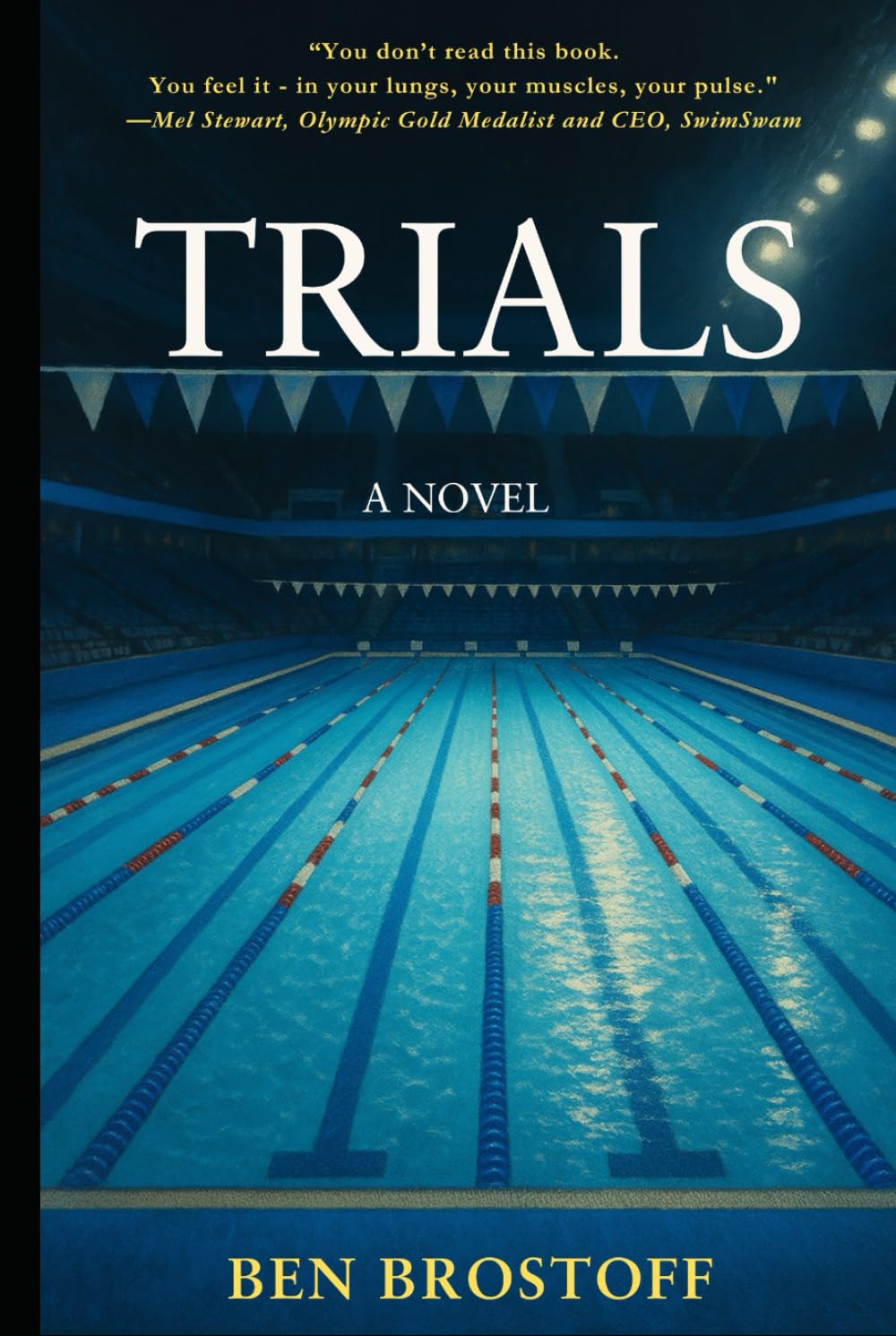
Trials: A Swimming Novel of Olympic Drea... |

Papi, Je veux connaître ton histoire (Fr... |
|
|---|---|---|---|---|
| Price | $29.99 | $12.99 | $23.99 | $46.79 |
| Brand | Ben A. Vagle | Aldous Huxley | Ben Brostoff | Céline Hamont |
| Merchant | Amazon | Amazon | Amazon | Amazon |
| Availability | Available Date | In Stock | In Stock | In Stock |