
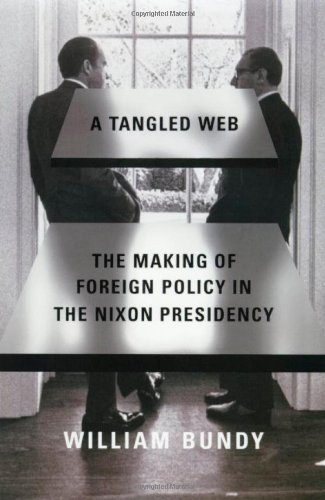
Tangled Web: The Making of Foreign Policy in the Nixon Presidency
$13.98
| Brand | William P. Bundy |
| Merchant | Amazon |
| Category | Books |
| Availability | In Stock Scarce |
| SKU | 0809091518 |
| Age Group | ADULT |
| Condition | NEW |
| Gender | UNISEX |
About this item
Tangled Web: The Making of Foreign Policy in the Nixon Presidency
The first authoritative account of the Nixon-Kissinger record in its entirety, this book explores the details of their work in every aspect and their short-term gains and losses, in a clear assessment of the consequences of Nixon and Kissinger's operational modes. 15,000 first printing. William Bundy has a lifetime of experience in the foreign policy arena; not only did he hold positions in the Defense and State Departments and the CIA throughout the 1950s and 1960s (which led to his becoming one of the protagonists of David Halberstam's The Best and the Brightest ), he was also the editor of Foreign Affairs magazine for 12 years. So when he turns his attention to the foreign-policy record of the Nixon administration, you can be sure that he speaks from an informed perspective. A Tangled Web is a detailed history that covers the multiple intricacies of Richard Nixon's dealings with other countries. While recognizing that a discussion of Nixon's foreign policy is inevitably a discussion about Richard Nixon and Henry Kissinger, he believes that Kissinger's influence has been overestimated. Although Kissinger frequently carried the ball, Bundy's contention is that it was the president who was calling the plays. To extend the metaphor, Bundy takes a hard look at just how much yardage the Nixon team was able to gain on each play. His ultimate judgment--that Nixon's penchant for secrecy and deception led to a dissolution of trust that ultimately weakened America's position as much, if not more, than it strengthened it--is not precisely revelatory, although it has rarely been articulated with such detail. --Ron Hogan Bundy was a second-tier policy maker in the escalation of the Vietnam War. This lengthy history, while covering the gamut of Nixonian foreign policy, harshly criticizes how Nixon and Kissinger handled the mess they inherited from Bundy, his brother McGeorge, and the rest of the best and brightest. From his opening, an analysis (probably the most complete so far published) of Nixon's and Johnson's mutual spying over the 1968 election-eve bombing halt, through the 1973 cease-fire, the author has little to recommend about the new president's ways for extricating the U.S. from the morass. Bundy views most dimly Nixon and Kissinger's circumvention of Washington's national security bureaucracies. That deceptiveness looms as the text's central theme--hence the title. Insightful, detailed, and none too praiseworthy of Nixon's foreign policy spectaculars, Bundy's account of his personalized approach to the leaders of China, the Soviet Union, and the Middle East should interest students of a time still contentious after 25 years. Gilbert Taylor ...Bundy's carefully researched analysis will have an impact on the academics, think-tank gurus and pundits whom Nixon professed to disdain but whose approval...he anxiously sought. -- The New York Times Book Review, Evan Thomas Bundy puts forth a very strong case that Nixon handled the domestic political side of the Vietnam war terribly, in effect amputating his own legs by antagonizing public and congressional opinion with secrets that never remained secret for long and unnecessary deceptions that were unraveled with speed and regularity. Even so, however, things are not quite so simple. The orderly American retreat that was the essence of Nixon's policy, insofar as it required the initial application of tremendous force, would inevitably entail even more dying. And with soldiers falling in open view of the television cameras, and the roar of combat amplified by the antiwar campaign of a press and an intellectual class that had always despised Nixon, the political consequences were bound to be both treacherous and incalculable. Nor is this all that is wrong with A Tangled Web . There are serious problems with its assessment of Nixon's diplomatic and military strategy itself, both in Vietnam and in the larger contest in which Vietnam formed a pivotal theater. The least convincing and the most disappointing aspect of the book is its softheaded treatment of détente with the USSR. The evidence Bundy adduces to show that the Kremlin was serious about a genuine thaw is mixed to say the least. His confusion about Soviet behavior is compounded by a refusal to reflect on the way in which the cold war actually came to an end. For the Soviet Union was pushed onto the path of self-destruction in the 1980's not by an American policy of friendship and embrace like the one Nixon here stands accused of having pursued too half-heartedly, but rather by a posture of unbridled competition in the ideological, economic, and military spheres. In counterpoint to Bundy's claim of what the world would have been spared by a more aggressive pursuit of détente, a better question is what it might have been spared had Nixon opted to employ Reagan's bold confrontational strategy, or at least elements of it, a decade earlier. -- Commentary, Gabriel Schoenfeld It is cool, reasonable, di
| Brand | William P. Bundy |
| Merchant | Amazon |
| Category | Books |
| Availability | In Stock Scarce |
| SKU | 0809091518 |
| Age Group | ADULT |
| Condition | NEW |
| Gender | UNISEX |
Similar Products







Compare with similar items
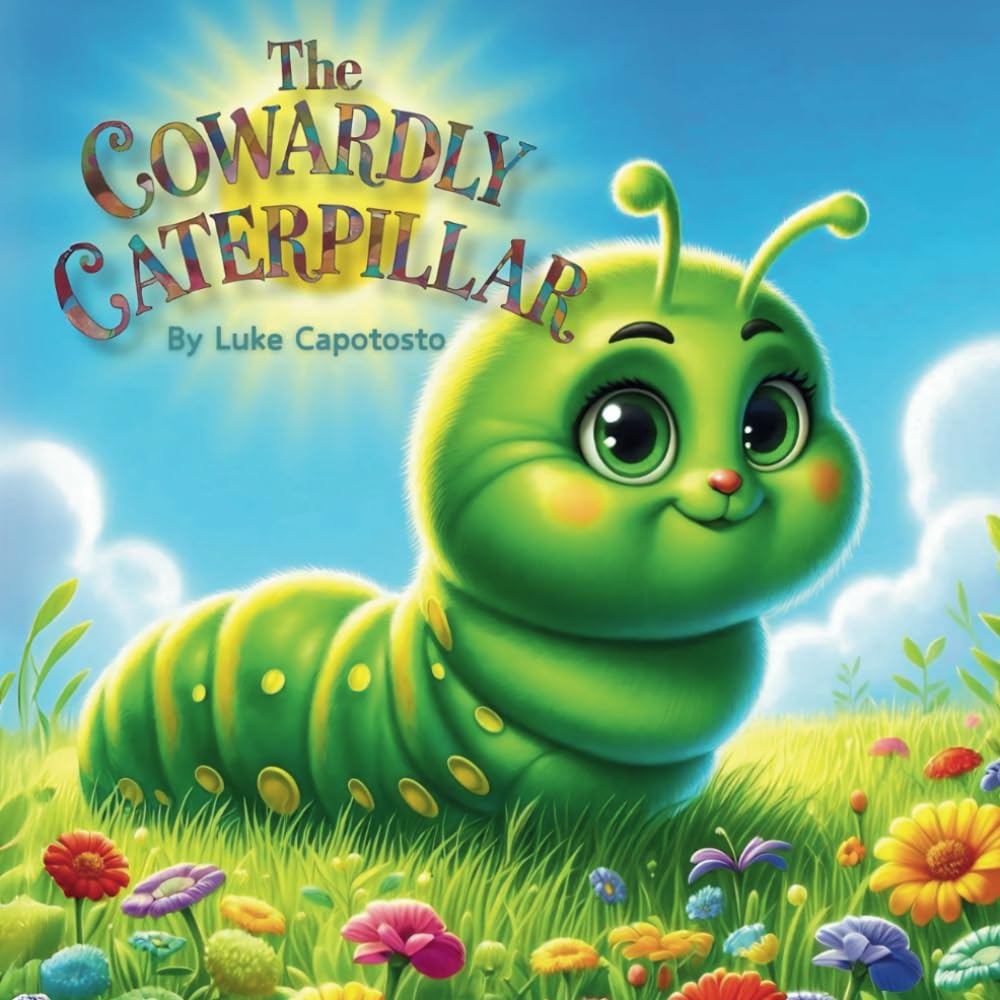
The Cowardly Caterpillar... |

Milo and the BIG Surprise... |

Semiconductor Essentials: A Leader's Exp... |

Freckles... |
|
|---|---|---|---|---|
| Price | $11.99 | $15.99 | $11.95 | $10.89 |
| Brand | Luke Capotosto | Stefanie Marky | Rupal Jain | Gene Stratton-Porter |
| Merchant | Amazon | Amazon | Amazon | Amazon |
| Availability | In Stock | In Stock | In Stock | In Stock |