
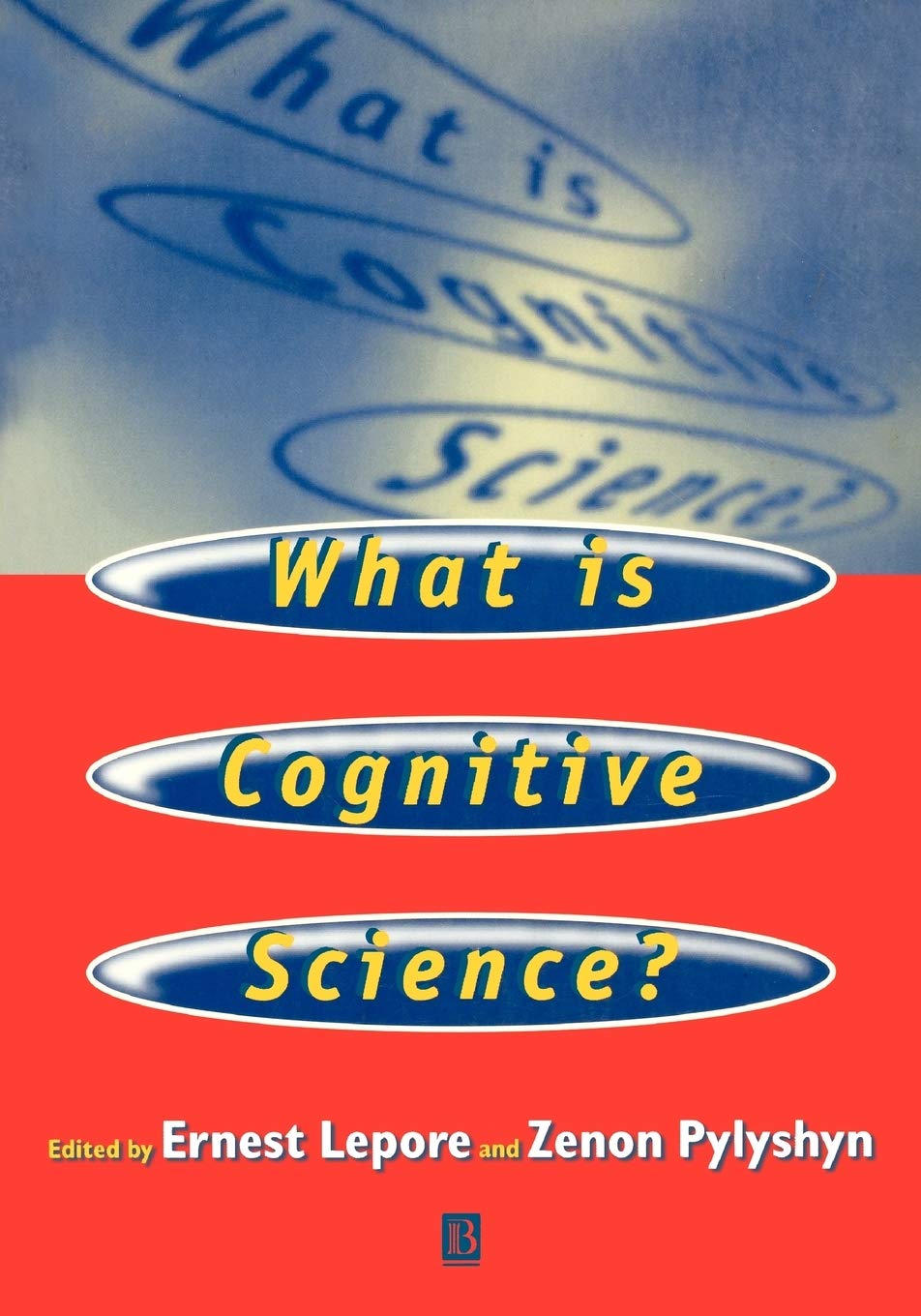
What is Cognitive Science?
$34.55
| Brand | Ernest Lepore |
| Merchant | Amazon |
| Category | Books |
| Availability | In Stock |
| SKU | 0631204946 |
| Age Group | ADULT |
| Condition | NEW |
| Gender | UNISEX |
| Google Product Category | Media > Books |
| Product Type | Books > Subjects > Health, Fitness & Dieting > Psychology & Counseling > Neuropsychology |
About this item
What is Cognitive Science?
Written by an assembly of leading researchers in the field, this volume provides an innovative and non-technical introduction to cognitive science, and the key issues that animate the field. "Many of the authors are major academic figures (e.g., Fodor, Pylyshyn, Stich), and all are authoritative in their fields. The book, taken as a whole, conveys some of the excitement going on today in cognitive science. Recommended." C. Koch, Choice "Having been based on a lecture series that brought together some of the most innovative research in the field, this collection will work superbly as an introductory text. Aimed at a diverse audience, the issues are given a systematic presentation with technical concepts introduced both gradually and precisely. Lepore and Pylyshyn's edition serves as a quite complete and provocative path of entry into the science of the mind." David Kilfoyle, York University, Canada "An excellent collection of chapters by very talented investigators who truly understand the mission of cognitive science." -- Rochel Gelman, Rutgers University Cognitive science is one of the few fields where modern developments in computer science and artificial intelligence promise to shed light on classical problems in psychology and the philosophy of the mind. Ancient questions of how we see the world, understand language, and reason - and even such exotic questions as how a material system can know about the outside world - are being explored with the powerful new conceptual prosthetics of computer modeling. We may, for the first time, be in a position to attempt an integrated theory of cognition based on ideas about cognitive architecture. Thus cognitive science offers the promise of bringing together modern conceptual tools and classical problems in a powerful new scholarly synthesis. Written by an assembly of leading researchers in the field, this volume provides an innovative and non-technical introduction to cognitive science, and the key issues that animate the field. It explores subject areas such as Mind, Vision, Language, and Neuroscience, and contains selections on the foundations of cognitive science, cognition development, reasoning, object recognition, eye movements, visual recognition, language processing and acquisition, optimality theory, and neuroscience. Students who are beginning their exploration of cognitive science will find both pedagogical tutorial essays to orient them to this exciting field, as well as more technical material, to provide a sense of how cognitive science is actually practised, at the state of the art. Cognitive science is one of the few fields where modern developments in computer science and artificial intelligence promise to shed light on classical problems in psychology and the philosophy of the mind. Ancient questions of how we see the world, understand language, and reason - and even such exotic questions as how a material system can know about the outside world - are being explored with the powerful new conceptual prosthetics of computer modeling. We may, for the first time, be in a position to attempt an integrated theory of cognition based on ideas about cognitive architecture. Thus cognitive science offers the promise of bringing together modern conceptual tools and classical problems in a powerful new scholarly synthesis. Written by an assembly of leading researchers in the field, this volume provides an innovative and non-technical introduction to cognitive science, and the key issues that animate the field. It explores subject areas such as Mind, Vision, Language, and Neuroscience, and contains selections on the foundations of cognitive science, cognition development, reasoning, object recognition, eye movements, visual recognition, language processing and acquisition, optimality theory, and neuroscience. Students who are beginning their exploration of cognitive science will find both pedagogical tutorial essays to orient them to this exciting field, as well as more technical material, to provide a sense of how cognitive science is actually practised, at the state of the art. Ernest Lepore is Director of the Centre for Cognitive Science at Rutgers University. He is the author of numerous articles in philosophy of mind and is co-author (with Jerry Fodor) of Holism (Blackwell 1991). He is editor of Truth and Interpretation (Blackwell 1989) and co-editor (with Robert Van Gulick) of John Searle and His Critics (Blackwell 1992), as well as general editor of the series "Philosophers and Their Critics", also published by Blackwell. Zenon Pylyshyn joined the faculty of Rutgers University as Board of Governors Professor of Cognitive Science and Director of the Rutgers Center for Cognitive Science in 1994. Pylyshyn has published over 60 scientific articles and book chapters, including a paper designated as a Science Citation Classic, What the Mind's Eye Tells the Mind's Brain, Psychological Bulletin, (1973). He is on th
| Brand | Ernest Lepore |
| Merchant | Amazon |
| Category | Books |
| Availability | In Stock |
| SKU | 0631204946 |
| Age Group | ADULT |
| Condition | NEW |
| Gender | UNISEX |
| Google Product Category | Media > Books |
| Product Type | Books > Subjects > Health, Fitness & Dieting > Psychology & Counseling > Neuropsychology |
Similar Products









Compare with similar items

Wordwheel a Day 2021: 366 fantastic word... |

If Tusquittee Could Talk... |

Every Interaction Matters: A Parent's Gu... |

Historia de México: Una guía fascinante ... |
|
|---|---|---|---|---|
| Price | $9.99 | $19.99 | $11.99 | $13.69 |
| Brand | Clarity Media | Lori McAfee | Stephan Mitchell | Billy Wellman |
| Merchant | Amazon | Amazon | Amazon | Amazon |
| Availability | In Stock | In Stock | In Stock | In Stock |