
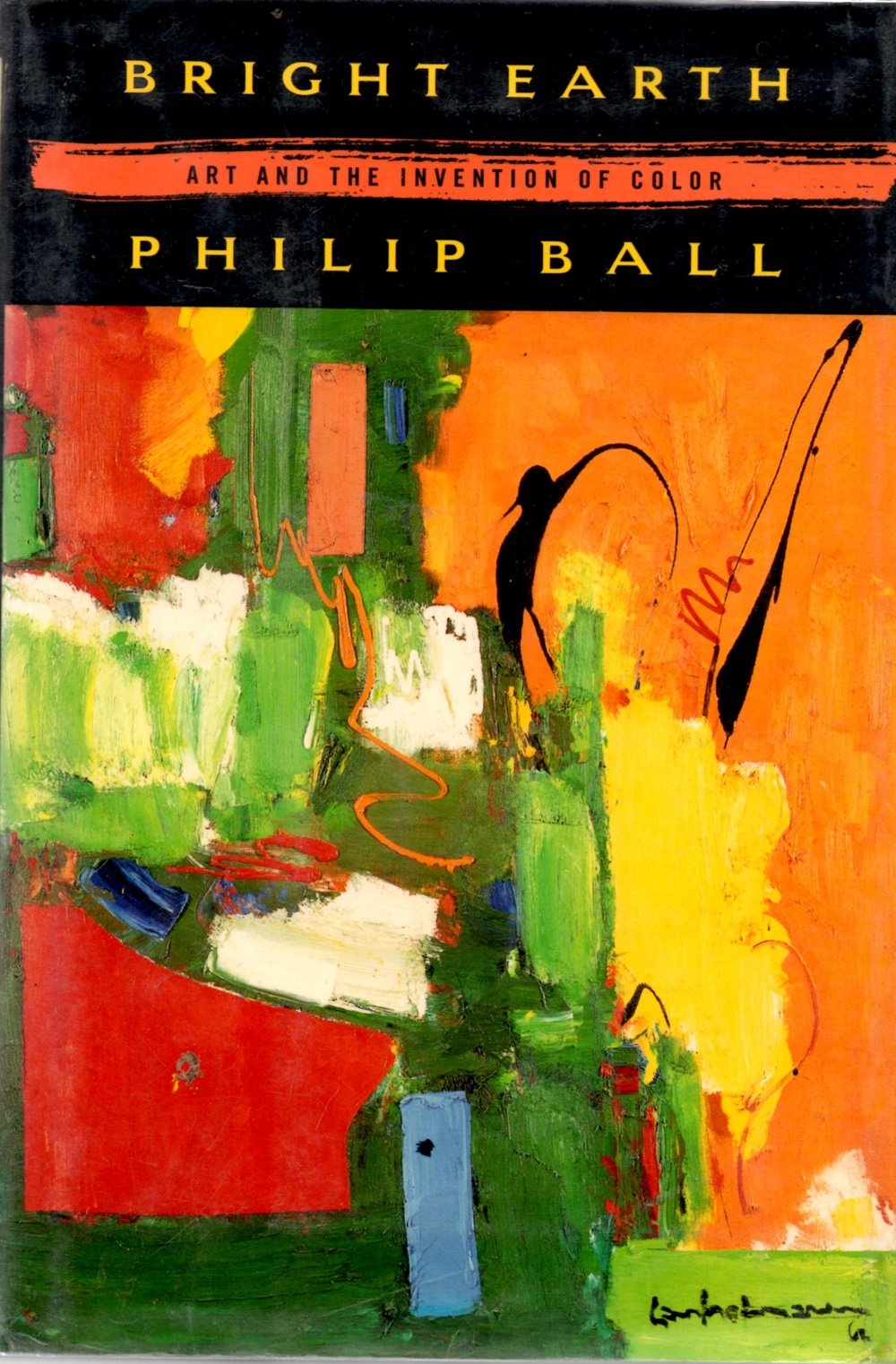
Bright Earth: Art and the Invention of Color
$41.39
| Brand | Philip Ball |
| Merchant | Amazon |
| Category | Books |
| Availability | In Stock Scarce |
| SKU | 0374116792 |
| Age Group | ADULT |
| Condition | NEW |
| Gender | UNISEX |
| Google Product Category | Media > Books |
| Product Type | Books > Subjects > Arts & Photography > Graphic Design > Techniques > Use of Color |
About this item
Bright Earth: Art and the Invention of Color
A fascinating study of the evolution of color in art and science from antiquity to the present. For art in the twentieth century, medium is the message. Many artists offer works defined by their materials. In no aspect is this more strikingly demonstrated than in the use of color. Bright Earth is the story of how color evolved and was produced for artistic and commercial use. The modern chemical industry was spawned and nurtured largely by the demand for color as many of today's major chemical companies began as manufacturers of aniline dye; advances in synthetic chemistry, both organic and inorganic, were stimulated in the nineteenth century by the quest for artificial colors. The future holds still more challenges for the color chemist, not only to provide new coloring materials, but also to replace old ones that will shortly become extinct, as concerns about the use of lead and cadmium pigments increase. In Bright Earth , Philip Ball brings together the themes of art and science to show that chemical technology and the use of color in art have always existed in a symbiotic relationship that has shaped both their courses throughout history. By tracing their co-evolution, Ball reveals how art is more of a science, and science more of an art, than is commonly appreciated on either side of the fence. The making of a painting relies on inspiration, craft, practice, and vision. But, observes the noted science writer Philip Ball, it also hinges on science: "For as long as painters have fashioned their visions and dreams into images, they have relied on technical knowledge and skill to supply their materials." In this lively study, Ball examines some of the tools and materials that chemists have added to the palette over the centuries. He also takes his readers on a learned tour of what science has taught us about vision, the nature of light, and the physical and cultural factors that condition our perceptions of color (the ancient Romans, he notes, had no term for brown or gray, but that does not mean they didn't use earth pigments in their work). Whether writing of matters scientific or artistic, Ball is a technologist but not a determinist. In the end, he writes, art depends not on science but on artists, and "each artist makes his or her own contract with the colors of the time." Readers with an interest in science, art, and the crossroads where they meet will relish Ball's erudite travels across the spectrum of light. --Gregory McNamee Trained as a chemist and physicist, British science writer Ball (Life's Matrix: A Biography of Water) here examines the physics of artists' pigments, from antiquity to the present and just beyond. He looks at the basic structures of pigments available to artists and at the art these pigments made possible (or not) at any given time. It is refreshing to see art, chiefly paintings, viewed by someone with a starting point outside of traditional art history or even the new art history. But the topic is complex, and Ball's sometimes unclear writing style will limit full access even to readers who are well grounded in the discipline. While his insights are frequently fresh, and he has spent time looking at art with the naked eye as well as through a microscope, Ball perhaps values his conclusions too much in isolation. His work is more focused on the actual chemistry than are the few other considerations of this topic available, such as John Gage's Color and Culture or Color and Meaning. Nonetheless, this rare treatment of a central issue in artists' work is recommended for advanced collections. (Illustrations not seen.) Jack Perry Brown, Art Inst. of Chicago Lib. Copyright 2002 Cahners Business Information, Inc. Shortly after my debut as the editor of The Sciences , I complained to our printer about the colors of a painting we were planning to reproduce. The printer's proof was rendering the rich, deep blues of the original in drab, lifeless tones. As a demanding neophyte, I insisted he do better. Two more proofs--and several hundred dollars--later I was forced to acknowledge what the printer, ever so patiently, had been explaining all along: the color I wanted was simply outside the "color space" accessible to the four process colors of offset printing. I could buy a closer approximation (never an exact match) for several thousand dollars more. But I could have saved my breath (and my publisher a lot of money) if only I'd known what Philip Ball, in his wonderful new book, Bright Earth , devotes an entire chapter to explaining: "A good blue [is] hard to find." Ball's canvas is grand yet effectively framed: how pigment materials have enhanced, and constrained, the "coloristic possibilities" available to artists through the ages. Anyone familiar with painting or graphic arts today--not to mention the millions more who must accept the compromises of Kodachrome or the color phosphors of their television or computer screens--knows that when you try correcting "too pink,
| Brand | Philip Ball |
| Merchant | Amazon |
| Category | Books |
| Availability | In Stock Scarce |
| SKU | 0374116792 |
| Age Group | ADULT |
| Condition | NEW |
| Gender | UNISEX |
| Google Product Category | Media > Books |
| Product Type | Books > Subjects > Arts & Photography > Graphic Design > Techniques > Use of Color |
Similar Products









Compare with similar items

Graphic Image Julia Child Mastering Art ... |

Samantha... |

Wild Wonders of Alaska: A Coloring Adven... |

Patriotic Prosperity: Solar Farm Contrib... |
|
|---|---|---|---|---|
| Price | $140.00 | $13.99 | $6.99 | $12.95 |
| Brand | Graphic Image | R L Porter | KROLLY PUBLISHING | Jeffrey Tufenkian |
| Merchant | bedbathbeyond | Amazon | Amazon | Amazon |
| Availability | In Stock | In Stock | In Stock | In Stock |