
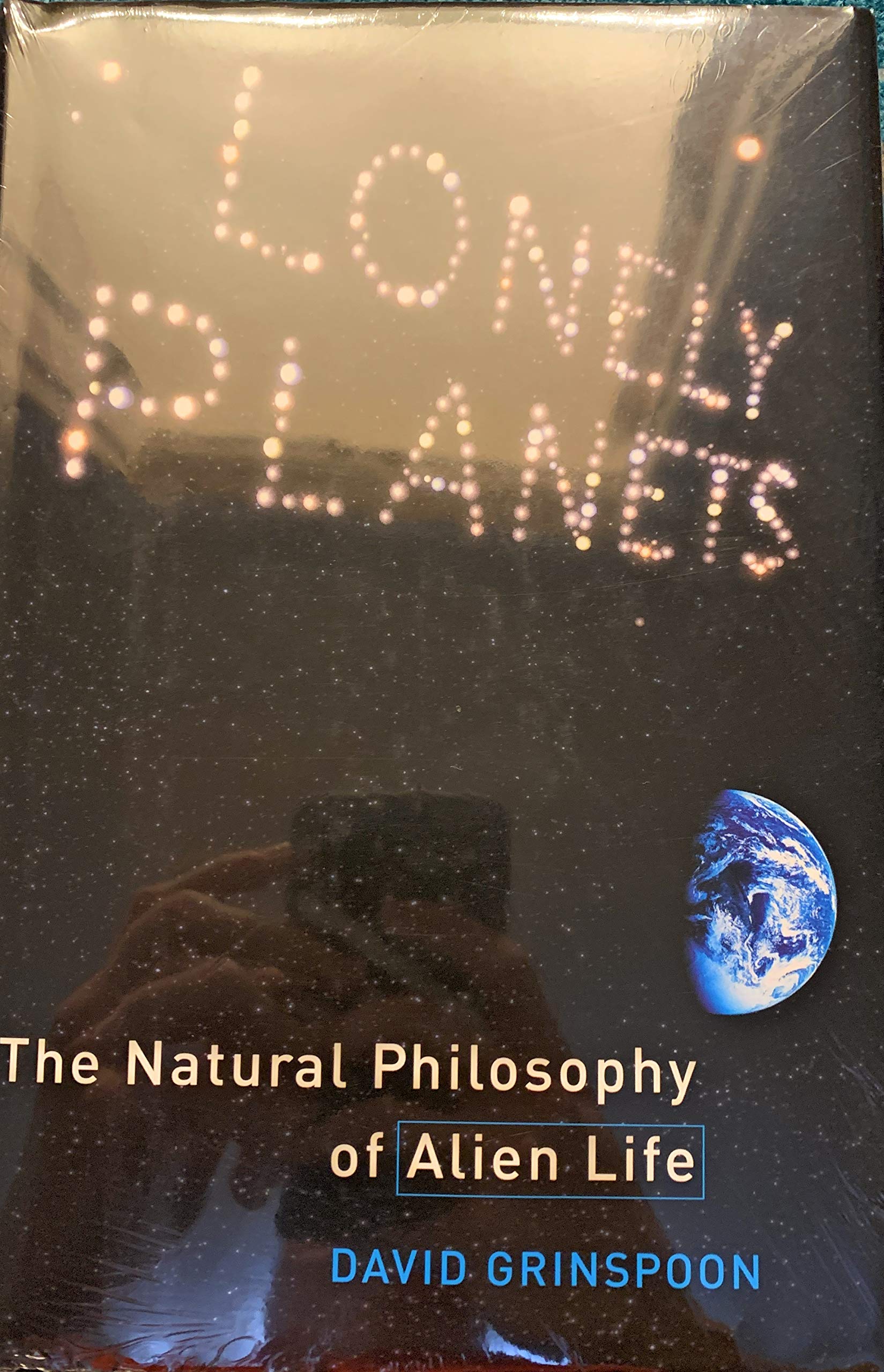
Lonely Planets: The Natural Philosophy of Alien Life
$26.12
| Brand | David Grinspoon |
| Merchant | Amazon |
| Category | Books |
| Availability | In Stock Scarce |
| SKU | 0060185406 |
| Age Group | ADULT |
| Condition | NEW |
| Gender | UNISEX |
About this item
Lonely Planets: The Natural Philosophy of Alien Life
A provocative, anecdotal book about the possibility of extra–terrestrial life by a leading young astronomer and advisor to NASA. It's been a quarter of a century since Carl Sagan first addressed the general public from the perspective of a practicing scientist confronting the possibility of extraterrestrial life. We've learned a lot in those 25 years, and leading astronomer David Grinspoon is well prepared to carry Sagan's legacy forward to a new generation of readers. In Lonely Planets , Grinspoon explores the big questions with unusual authority, passion and panache: How widespread are life and intelligence in the cosmos? Is life on Earth an accident or in some sense the 'purpose' of this universe? And how can we, working from a sample size of one, even begin to think intelligently about life on distant planets? He gives us new ways of thinking about life and outlines his controversial view that Venus, not Mars, is the best candidate for finding nearby life. Lonely Planets concludes with provocative speculations on human destiny and reveals how the search for ET life unites our spiritual and scientific quests for connection with the cosmos. Examining scientific data, reviewing historical records and sympathetically analyzing folk beliefs, Grinspoon presents a comprehensive history of ideas about extraterrestrial life and offers provocative new scientific speculations. Rich in personal, often amusing anecdotes, his narrative expertly guides readers through history, science, and prevailing beliefs about life on other planets. In Lonely Planets , astronomer David Grinspoon is buoyantly optimistic about the possibility that we are not alone in the universe. Grinspoon, who serves as principal scientist in the Department of Space Studies at the Southwest Research Institute, lays out a detailed but not boring case for life on other planets, dropping authoritative quotes and goofy footnotes in equal measure. The Grinspoon family hung out with Carl Sagan and other astronomical royalty, giving young David an early appreciation for SETI and the heady astrobiological theorizing of the 1970s. In the 21st century, scientists are still split on the question of extraterrestrial life. Grinspoon believes that a "natural philosophy" approach is the key to furthering our knowledge in this field, since there is precious little evidence with which to apply the scientific method. Instead of looking for the familiar and testable, he writes, we should expect the unexpected. Expecting to find DNA elsewhere is like expecting a Star Trek universe with humanoid aliens who speak English and insist that we join them for dinner at eight. Lonely Planets is a substantial book, covering the origins of life on Earth as well as the changes in religious and social thought that have affected astronomers' search for other planets and their theoretical inhabitants. Grinspoon's style is exuberant, even a little cocky, and the result is delightful readability. Lonely Planets lets readers share the dismay of finding out there are probably no Martians and the thrill of wondering if there might be Europans. "I think our galaxy is full of species," writes Grinspoon. "The wise ones are out there waiting for us to join them." --Therese Littleton As he tells engagingly the story of humankind's long fascination with the possibility of extraterrestrial life, Grinspoon ponders the impact of a first contact in the form of a radio message from an intelligent civilization. "It might be frightening, liberating, uplifting, disturbing, or all of the above, but I say, 'Bring it on.'" And what if the first form of extraterrestrial life to be discovered turns out to be microbes? It "would enlarge our kingdom." Grinspoon, principal scientist in the department of space studies at the Southwest Research Institute and adjunct professor of astrophysical and planetary sciences at the University of Colorado at Boulder, concludes with his own belief: "I think our galaxy is full of species who have crawled up from the slime of their home worlds, evolved self-awareness and started to tinker, passed beyond the threat of technological self-extermination, and transcended their animal origins to move out into the cosmos." Editors of Scientific American Astronomer and space advocate Grinspoon pulls lots of facts, hypotheses, and beliefs together in this entertaining consideration of the likelihood of encountering extraterrestrial life. Nevertheless, the book is orderly, as well, starting with the astronomical and social history that enabled reasonably learned minds to hypothesize about other worlds and the possibility of life on them, and continuing with what has been learned during the past four decades about the solar system and what lies beyond it. Grinspoon describes the intricate, four-centuries-old dance of astronomy and biology, and concludes by discussing where theories may take us when the limits of current data have been reached. He seasons the discussion
| Brand | David Grinspoon |
| Merchant | Amazon |
| Category | Books |
| Availability | In Stock Scarce |
| SKU | 0060185406 |
| Age Group | ADULT |
| Condition | NEW |
| Gender | UNISEX |
Similar Products









Compare with similar items

San Cristobal Valley,'Handwoven Hand Emb... |

The Wrong Way Up... |

Graphic Image The United States of Cockt... |

JAKE: An Evil Dead MC Story (The Evil De... |
|
|---|---|---|---|---|
| Price | $17.99 | $25.00 | $120.00 | $13.99 |
| Brand | NOVICA | Ray Ora Osborn | Graphic Image | Nicole James |
| Merchant | Novica | Amazon | bedbathbeyond | Amazon |
| Availability | In Stock | In Stock | In Stock | In Stock |